


Offcanvas top
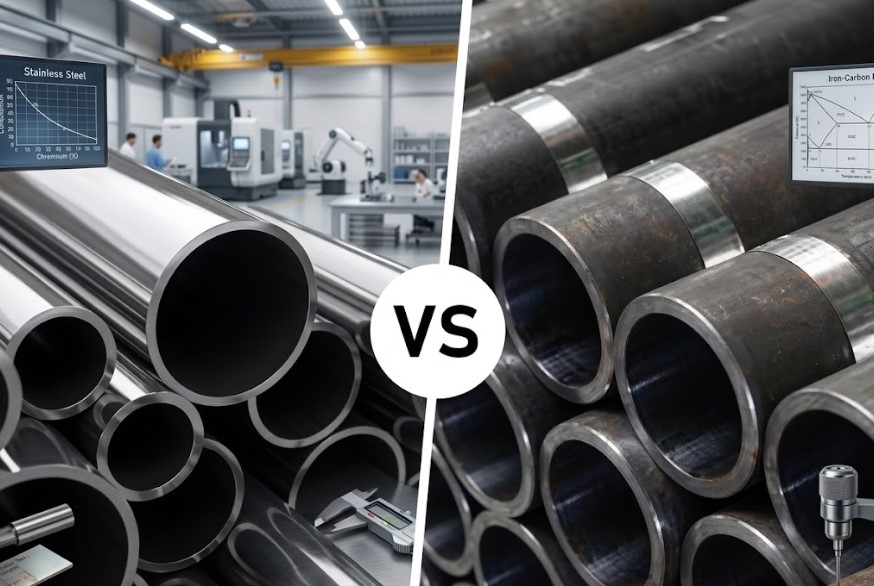
Stainless Steel Pipes vs Carbon Steel Pipes: Which Is Better?
Selecting the right pipe material is a critical engineering decision that directly impacts system performance, durability, safety, and cost. Stainless steel and carbon steel pipes are two of the most widely used materials across industries such as oil and gas, construction, water treatment, and manufacturing.
While both serve similar functions, they differ significantly in composition, properties, and applications. This guide provides a detailed, professional comparison to help you understand which option is better based on real-world conditions, technical data, and expert insights.
Understanding the Basics
What Are Stainless Steel Pipes?
Stainless steel pipes are made from iron alloys containing at least 10.5 percent chromium. This chromium forms a passive oxide layer that protects the surface from corrosion and rust.
Additional elements such as nickel and molybdenum may be added to enhance strength and resistance to chemicals and high temperatures.
What Are Carbon Steel Pipes?
Carbon steel pipes are primarily composed of iron and carbon, typically ranging from 0.05 percent to 2.1 percent carbon content.
The carbon content increases hardness and strength but reduces corrosion resistance, making these pipes more vulnerable to rust when exposed to moisture.
Key Differences Between Stainless Steel and Carbon Steel Pipes
1. Corrosion Resistance
Corrosion resistance is the most important factor when comparing these materials.
- Stainless steel pipes offer excellent resistance due to the chromium oxide layer that prevents oxidation.
- Carbon steel pipes are prone to rust and corrosion unless protected by coatings or galvanization.
Insight: In marine, chemical, or humid environments, stainless steel significantly outperforms carbon steel in lifespan and reliability.
2. Strength and Mechanical Properties
- Carbon steel is known for its high tensile strength and rigidity, making it suitable for heavy-duty structural applications.
- Stainless steel offers better ductility and flexibility, allowing it to withstand stress without cracking.
Expert Angle: While carbon steel handles high-pressure systems effectively, stainless steel performs better under dynamic stress and thermal expansion conditions.
3. Cost Comparison
Cost plays a major role in material selection.
- Carbon steel pipes are significantly cheaper upfront.
- Stainless steel pipes can cost three to four times more initially.
Lifecycle Insight: Although stainless steel has a higher initial cost, its lower maintenance and longer lifespan often result in a lower total cost of ownership.
4. Durability and Lifespan
- Stainless steel pipes offer superior durability in corrosive environments and require minimal maintenance.
- Carbon steel pipes may degrade faster due to rust and require regular inspection, coating, or replacement.
Example Case: In a coastal desalination plant, stainless steel piping can last decades with minimal degradation, while carbon steel would require frequent maintenance due to salt exposure.
5. Weldability and Fabrication
- Carbon steel is easier to weld and fabricate, making it cost-effective for large-scale construction.
- Stainless steel requires specialized welding techniques due to its alloy composition.
Practical Insight: For projects with complex fabrication requirements, carbon steel is often preferred to reduce labor costs.
6. Temperature Resistance
Both materials perform well under high temperatures, but their behavior differs:
- Carbon steel is commonly used in high-pressure steam and power plant systems.
- Stainless steel performs better in extreme temperature variations and corrosive heat environments.
7. Appearance and Hygiene
- Stainless steel has a clean, polished surface that resists contamination.
- Carbon steel has a dull finish and often requires coatings.
Industry Example: Food processing and pharmaceutical industries prefer stainless steel because it is non-reactive and easy to sanitize.
Stainless Steel vs Carbon Steel Pipes Comparison Table
| Feature | Stainless Steel Pipes | Carbon Steel Pipes |
|---|---|---|
| Composition | Iron with chromium, nickel | Iron with carbon |
| Corrosion Resistance | Excellent | Poor without coating |
| Strength | High with flexibility | Very high and rigid |
| Cost | High initial cost | Low initial cost |
| Maintenance | Low | High |
| Lifespan | Long in harsh environments | Shorter in corrosive conditions |
| Weldability | Requires expertise | Easy to weld |
| Appearance | Smooth and polished | Rough, dull finish |
| Hygiene | Highly hygienic | Not suitable for sanitary use |
| Common Uses | Food, pharma, marine | Oil, gas, construction |
Applications: Where Each Material Performs Best
Stainless Steel Pipe Applications
- Food and beverage processing
- Pharmaceutical manufacturing
- Chemical plants
- Marine and offshore systems
- Water treatment and desalination
Carbon Steel Pipe Applications
- Oil and gas pipelines
- Structural frameworks
- Power plants
- Industrial machinery
- Non-corrosive fluid transport
Case Breakdown:
In oil refineries, carbon steel is often used for transporting crude oil due to cost efficiency, while stainless steel is used in sections exposed to corrosive chemicals.
Advantages and Disadvantages
Stainless Steel Pipes
Advantages
- Excellent corrosion resistance
- Long lifespan
- Low maintenance
- Hygienic and clean surface
Disadvantages
- High initial cost
- Complex fabrication
Carbon Steel Pipes
Advantages
- High strength
- Lower cost
- Easy to weld and fabricate
Disadvantages
- Prone to corrosion
- Higher maintenance
- Shorter lifespan in harsh environments
Real-World Decision Factors
Choosing between stainless steel and carbon steel depends on several key factors:
Environmental Conditions
- Use stainless steel in humid, marine, or chemical environments
- Use carbon steel in dry, controlled environments
Budget Constraints
- Limited budget favors carbon steel
- Long-term investment favors stainless steel
Maintenance Requirements
- Low maintenance needs favor stainless steel
- Acceptable maintenance allows carbon steel
Application Type
- Hygienic systems require stainless steel
- Structural and pressure systems often use carbon steel
Which Is Better?
There is no universal answer. The better option depends on your specific application.
- Choose stainless steel pipes when corrosion resistance, hygiene, and long-term durability are critical.
- Choose carbon steel pipes when strength, affordability, and structural performance are the main priorities.
Final Insight: Engineering decisions should not be based solely on upfront cost. A lifecycle approach that considers maintenance, replacement, and downtime often makes stainless steel the better long-term choice in demanding environments.
Partnering with a high quality pipe supplier can further ensure consistent performance, material reliability, and long-term project success.
AI Overview
Compare stainless steel vs carbon steel pipes in terms of corrosion resistance, strength, cost, and applications to choose the best material for durability and performance.
FAQs
Which is better carbon steel or stainless steel?
Stainless steel is better for corrosion resistance and long-term durability in harsh environments. Carbon steel is better for strength and cost-effective structural applications.
When to use carbon steel vs stainless steel pipe?
Use carbon steel pipes for high-pressure, non-corrosive environments like oil and gas systems. Choose stainless steel for corrosive, hygienic, or moisture-prone applications.
Why don’t we use stainless steel pipes?
Stainless steel pipes are not always used due to their higher initial cost and complex fabrication requirements. For budget-sensitive or large-scale projects, carbon steel is often more practical.
Which steel pipe is best?
The best steel pipe depends on the application and environment. Stainless steel is ideal for durability and corrosion resistance, while carbon steel excels in strength and affordability.
Conclusion
Choosing between stainless steel pipes and carbon steel pipes ultimately depends on your project requirements, operating environment, and long-term goals. Stainless steel stands out for its corrosion resistance, durability, and low maintenance, making it ideal for demanding and hygienic applications.
On the other hand, carbon steel remains a practical choice for high-strength, cost-sensitive projects where environmental exposure is limited.
A well-informed decision should consider not only the initial cost but also lifecycle performance, maintenance needs, and reliability under real working conditions. Evaluating these factors ensures better efficiency, reduced downtime, and improved system longevity.
For projects requiring expert guidance and high-quality pipe fittings, Fitting World Trading LLC delivers reliable solutions in carbon steel and stainless steel piping systems, helping ensure durability, efficiency, and long-term performance.
Expert Guides on Pipes, Fittings & Industrial Solutions
Discover guides on carbon & stainless steel pipes, flanges, fittings, and high-pressure products for your next project.
- Top 5 Benefits of Camlock Fittings for Industrial Applications: Boost efficiency and safety with durable camlock fittings
- What is the Difference Between BSPT and NPT Thread Fittings?: Understand key differences between BSPT and NPT fittings.
- How to Choose Buttweld Fittings for UAE Construction Projects: Expert Tips for Selecting Durable Buttweld Fittings in UAE Construction.
- Grooved Pipe Fittings for Fire Protection Systems in UAE: Reliable and durable grooved pipe fittings for efficient UAE fire protection systems.
- Which High Pressure Valves Are Best for Oil and Gas: Choosing the right high-pressure valves for safe and efficient oil and gas operations.
Popular Posts
March 22, 2024
March 28, 2024
April 22, 2024
April 30, 2024
