


Offcanvas top
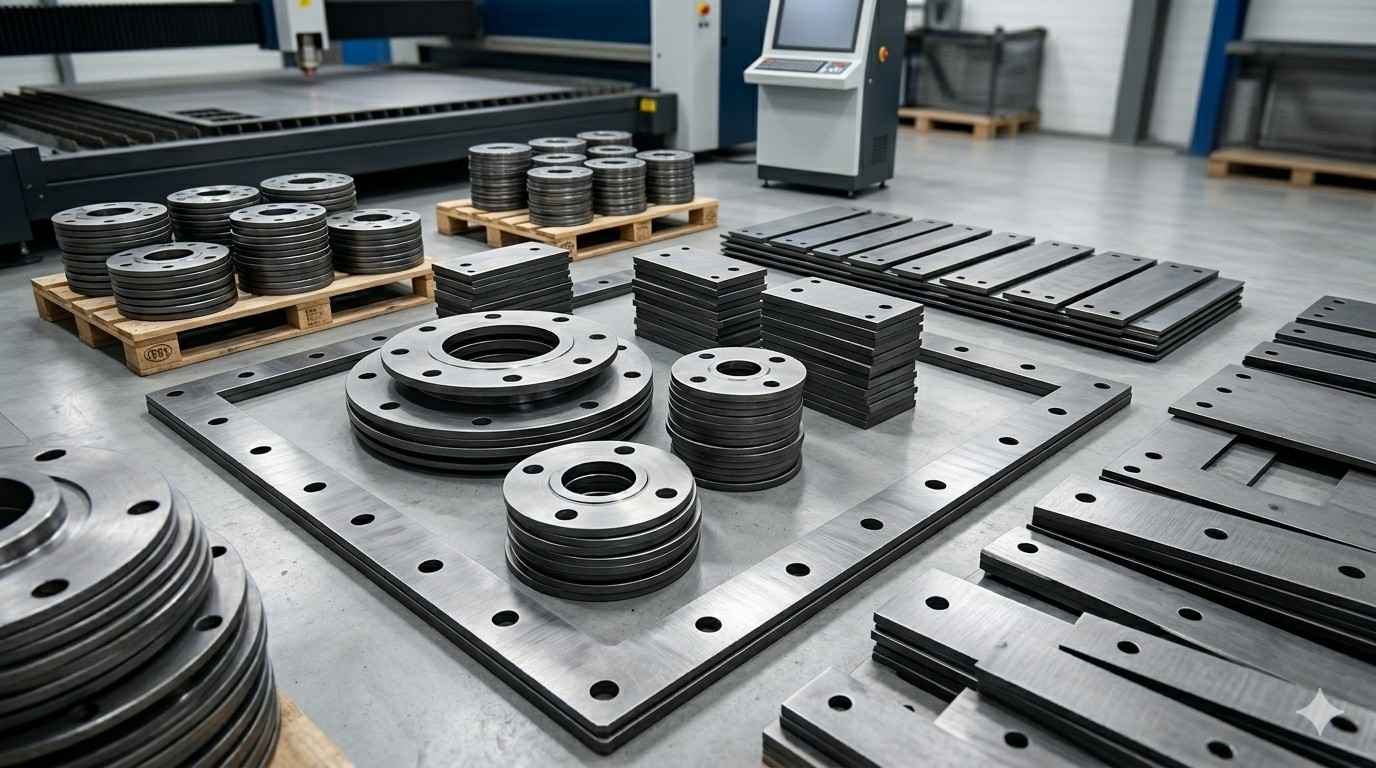
How to Select the Right Gasket for Industrial Applications
Selecting the right gasket is a critical engineering decision in any industrial system where pressure, temperature, and fluid containment matter. The performance of piping systems, valves, heat exchangers, and pressure vessels heavily depends on gasket selection accuracy.
A wrong gasket choice can lead to leakage, system failure, safety risks, unplanned downtime, and high maintenance costs.
That is why understanding how to select the right gasket is essential for engineers, maintenance teams, and procurement specialists across industries such as oil & gas, chemical processing, water treatment, power generation, and manufacturing.
What Is a Gasket in Industrial Applications?
A gasket is a mechanical sealing component placed between two stationary surfaces such as flanges to prevent leakage of liquids or gases under compression.
Its primary function is to fill microscopic irregularities on sealing surfaces and create a tight, reliable seal even under fluctuating pressure and temperature conditions.
Industrial gaskets are widely used in:
- Pipe flange connections
- Pumps and compressors
- Heat exchangers
- Valves and pressure vessels
- Chemical processing equipment
Main Types of Industrial Gaskets
Industrial gaskets are generally divided into three major categories based on construction and performance requirements.
Non-Metallic Gaskets
Non-metallic gaskets are made from materials such as rubber, PTFE, CAF gaskets, or graphite.
These gaskets are designed for low to moderate pressure applications where flexibility and chemical resistance are important.
They are commonly used in water pipelines, HVAC systems, and general industrial sealing applications where operating conditions are stable and not extreme.
Semi-Metallic Gaskets
Semi-metallic gaskets combine metallic reinforcement with soft sealing fillers like graphite or PTFE. This combination allows them to perform effectively in medium to high-pressure systems.
They are widely used in refineries, chemical plants, and power generation systems where both strength and adaptability are required. The spiral wound gasket is one of the most common semi-metallic options used in these environments.
Metallic Gaskets
Metallic gaskets are designed for extreme operating conditions involving high pressure and high temperature. These gaskets are used in critical applications such as petrochemical plants, offshore platforms, and high-pressure steam systems.
They offer excellent mechanical strength and long-term sealing reliability in harsh environments.
Key Factors in How to Select the Right Gasket
Selecting the correct gasket requires evaluating multiple engineering parameters. Each factor directly impacts sealing performance, safety, and durability.
1. Fluid or Media Compatibility
The type of fluid passing through the system is one of the most important selection criteria. For corrosive or aggressive chemicals such as acids and alkalis, PTFE or graphite-based gaskets are recommended due to their high chemical resistance.
For hydrocarbons, oils, and fuels, elastomer-based gaskets such as NBR or Viton are widely used because they provide strong resistance to oil degradation.
In water and steam applications, rubber or compressed fiber gaskets are commonly used due to their flexibility and sealing ability under moderate conditions.
2. Temperature Conditions
Temperature significantly affects gasket material performance and lifespan. At low temperatures, rubber and PTFE gaskets maintain flexibility and sealing efficiency.
In medium temperature ranges, materials like graphite and compressed fiber offer better thermal stability.
For high-temperature environments such as steam pipelines or refinery systems, metallic or spiral wound gaskets are required due to their ability to withstand thermal expansion and prevent failure under heat stress.
3. Pressure Rating of the System
System pressure determines the mechanical strength required from a gasket. Low-pressure systems typically use non-metallic gaskets because they require minimal compression force.
Medium-pressure applications require semi-metallic gaskets that offer a balance between flexibility and strength. High-pressure systems demand metallic or reinforced designs such as kammprofile or spiral wound gaskets to ensure long-term sealing integrity under extreme force.
4. Flange Type and Surface Condition
The design of the flange directly impacts gasket performance. Flat face flanges typically use full-face or soft gaskets for uniform compression. Raised face flanges are more compatible with spiral wound or semi-metallic gaskets.
Ring-type joint (RTJ) flanges require precision-machined ring joint gaskets designed specifically for high-pressure sealing.
Surface roughness also plays a key role. Smooth surfaces require controlled compression gaskets, while rough surfaces require highly conformable materials that can fill irregularities effectively.
5. Industry Standards and Certifications
Industrial gasket selection must comply with global standards such as ASME, DIN, and API to ensure safety and reliability.
Certified gaskets guarantee dimensional accuracy, pressure resistance, and material consistency. This is especially important in regulated industries such as oil & gas, chemical processing, and power generation where failure is not an option.
Gasket Material Selection Guide
Material selection directly influences gasket performance and service life. Rubber gaskets are widely used for general applications due to their flexibility and cost-effectiveness. PTFE gaskets are preferred in chemical industries due to their excellent resistance to aggressive fluids.
Graphite gaskets are ideal for high-temperature applications because they maintain stability under extreme heat. Metallic gaskets are used in critical systems requiring maximum strength, pressure resistance, and durability.
Industrial Applications of Gaskets
Gaskets are essential across multiple industries and applications, including:
- Oil and gas pipelines
- Petrochemical refineries
- Water treatment plants
- Power generation systems
- HVAC and construction equipment
- Industrial manufacturing machinery
Each application requires specific consideration of pressure, temperature, and chemical exposure to ensure safe and efficient operation.
Role of Reliable Gasket Suppliers
Choosing the right gasket is not only about technical specifications but also about selecting a reliable gasket supplier who understands industrial requirements.
A trusted supplier ensures proper material selection, compliance with international standards, and availability of customized gasket solutions for complex applications. Working with experienced suppliers reduces downtime, improves operational efficiency, and enhances system safety.
For high-quality industrial sealing solutions, FW Trading LLC provides a wide range of industrial products designed for demanding applications across multiple sectors.
Common Mistakes in Gasket Selection
Many industrial failures occur due to incorrect gasket selection practices. One major mistake is ignoring chemical compatibility, which leads to material degradation over time.
Another common error is underestimating pressure and temperature conditions, resulting in gasket deformation or blowout.
Using the wrong flange type or surface finish also leads to improper sealing. Cost-based selection without technical evaluation often results in long-term operational failures and higher maintenance expenses.
Conclusion
Understanding how to select the right gasket is essential for ensuring safe, efficient, and reliable industrial operations. The correct selection depends on multiple factors including fluid type, pressure, temperature, flange design, and material compatibility.
A properly selected gasket not only prevents leakage but also enhances system performance, reduces downtime, and improves overall operational efficiency.
For premium industrial sealing products and expert support, visit FW Trading LLC. For inquiries, technical assistance, or product sourcing, please reach out through the contact us page.
Expert Guides on Industrial Insights
If you want to deepen your understanding of industrial fittings, piping systems, and engineering best practices, explore these related articles:
- 5 Reasons Camlock Fittings Are Ideal for Industrial Use – Learn why camlock fittings are widely preferred for fast, secure, and leak-free industrial connections.
- The Complete Guide to Camlock Fittings: Types and Uses – A detailed breakdown of camlock fitting types and their applications in industrial systems.
- The Best High Pressure Valves for Oil and Gas Applications – Explore high-performance valves designed for safety and reliability in oil and gas operations.
- 10 Common Installation Mistakes That Can Damage Industrial Fittings – Discover key installation errors that lead to system failure and how to avoid them.
- Why Grooved Fittings Are a Smart Choice for Piping Systems – Understand the advantages of grooved fittings in modern piping networks, including speed and efficiency.
Popular Posts
March 22, 2024
March 28, 2024
April 22, 2024
April 30, 2024
