


Offcanvas top
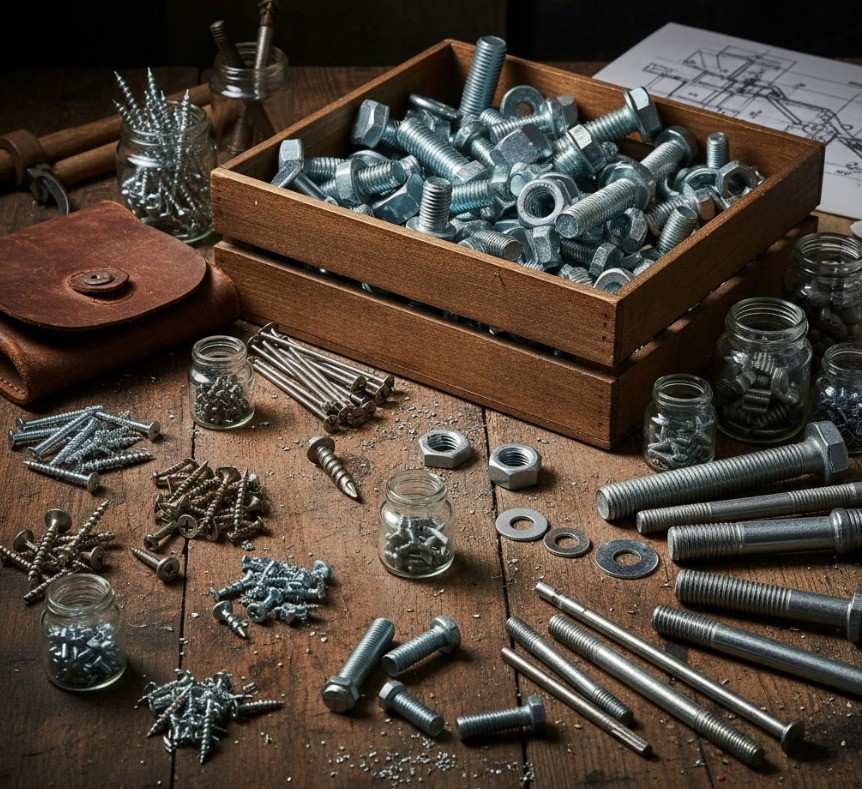
Guide to Fasteners: Screws, Nails, Bolts, and More
Fasteners are the backbone of construction, manufacturing, and DIY projects. Selecting the right screw, nail, or bolt can make the difference between a durable assembly and a structure that fails prematurely.
Understanding their types, applications, and specifications ensures efficiency, safety, and reliability.
What Are Fasteners?
Fasteners are mechanical devices that join or affix materials together. They range from screws, bolts, and nuts to rivets, washers, and specialized industrial connectors.
Each fastener is designed for specific load, material, and environmental requirements. Professionals rely on high-strength fasteners for structural applications, while DIY enthusiasts prioritize versatility and ease of use.
Common Types of Fasteners
Screws
Screws are threaded fasteners that hold materials together by cutting or forming threads in the substrate. They are versatile, offering precise clamping, easy removal, and suitability for wood, metal, and plastic applications. The type of screw you choose depends on the material, load, and installation method.
- Wood Screws: Designed for joining wooden materials; tapered threads allow easy insertion without splitting wood. For projects requiring both durability and a decorative finish, high-quality Brass screws are a reliable choice that resist corrosion and maintain a polished look.
- Machine Screws: Used with tapped holes or nuts in metal assemblies; available in fine or coarse threads.
- Self-Tapping Screws: Create their own threads in softer metals or plastics, eliminating pre-drilling.
- Deck Screws: Specifically for outdoor decking, corrosion-resistant with specialized coating.
- Sheet Metal Screws: Sharp threads for securing thin metal sheets or attaching metal to wood/plastic.
Nails
Nails are unthreaded fasteners driven by hammer or nail gun, primarily used in woodworking and light construction. They provide shear strength and are quick to install but are generally less resistant to pull-out than screws.
- Common Nails: General-purpose nails for framing and construction; strong but simple design.
- Finishing Nails: Thin, small-headed nails ideal for trim, molding, and decorative work.
- Ring Shank Nails: Feature ridged shafts for better grip and holding power in wood.
- Roofing Nails: Designed with large heads and corrosion-resistant coatings for roof installations.
Bolts and Nuts
Bolts are high-strength fasteners used with nuts to clamp materials securely. They are ideal for heavy-duty or structural applications where removable joints are required.
- Hex Bolts: Standard six-sided head for use with wrenches; widely used in construction and machinery. For businesses and workshops sourcing bulk industrial fasteners, a trusted fasteners supplier can provide a wide range of bolts, nuts, and specialty components.
- Carriage Bolts: Round, domed head with a square neck to prevent rotation; commonly used in wood.
- Lag Bolts: Heavy-duty screws with coarse threads for wood or masonry applications.
- Anchor Bolts: Embedded in concrete to provide strong, permanent fastening points.
- Nut Types: Include hex nuts, lock nuts, and nylon-insert nuts to prevent loosening.
Washers and Inserts
Washers and threaded inserts enhance fastener performance by distributing load, preventing surface damage, and increasing thread durability.
- Flat Washers: Evenly distribute pressure and protect surfaces from indentation. Using copper washers can improve corrosion resistance and longevity, especially in plumbing, automotive, and industrial machinery assemblies.
- Lock Washers: Prevent loosening in high-vibration environments.
- Spring Washers: Provide tension and maintain a secure fit.
- Threaded Inserts: Offer durable threads in wood, plastic, or repair applications.
Rivets
Rivets are permanent fasteners used when screws or bolts are impractical. They join materials by deforming the rivet end to secure the assembly.
- Blind Rivets (Pop Rivets): Installed from one side of a workpiece; common in sheet metal work.
- Countersunk Rivets: Sit flush with the material surface, providing a smooth finish.
- Solid Rivets: Require access to both sides; extremely strong and often used in aerospace.
Anchors, Pins, and Clips
Non-threaded fasteners serve specialized purposes where screws or bolts are not suitable.
- Wall Anchors / Plugs: Secure screws in masonry, drywall, or hollow walls.
- Pins: Align and hold components, often temporary.
- Clips and Retainers: Quick-release or fastening solutions in automotive and machinery assemblies.
Materials and Finishes
Fasteners are produced from diverse materials to match application demands. Stainless steel provides corrosion resistance for outdoor or marine environments, while carbon steel maximizes strength at lower cost. Other materials like brass, aluminum, and even plastics serve specialized roles.
Finishes such as zinc plating, hot‑dip galvanizing, and black oxide provide additional protection against environmental degradation and wear.
Understanding Thread Patterns
Selecting the right fastener means understanding thread systems. Fasteners use either metric or imperial (inch) threads. Metric threads are measured in millimeters and pitch, while imperial threads use threads per inch. Mixing systems leads to improper fit and potential thread damage.
Standards like ISO 898 define mechanical properties, tensile strength, and proof loads for metric fasteners, ensuring compatibility and safety in engineered applications.
Fasteners also feature right‑handed and left‑handed threads. Left‑hand threads resist loosening in reverse‑turning applications and can be critical in rotating assemblies or specific industrial uses.
Factors to Consider When Choosing Fasteners
Selecting the right fastener involves understanding the load, environment, and materials involved. Considerations include:
- Material compatibility: Avoid galvanic corrosion by matching fastener and substrate materials.
- Load requirements: Ensure the fastener can handle shear, tension, or dynamic forces.
- Environmental factors: Choose corrosion-resistant fasteners for outdoor or humid conditions.
- Installation method: Consider whether hand tools, power tools, or specialized equipment will be used.
Fastener Standards and Specifications
Industry standards ensure fasteners meet quality and safety benchmarks. Organizations like ISO, DIN, and ASTM provide specifications for thread sizes, tensile strength, and material composition. Understanding these standards helps buyers make informed decisions and ensures compatibility with machinery and assemblies.
Practical Tips for Fastener Use
- Pre-drill holes for screws and bolts to prevent material splitting.
- Use washers to distribute load and prevent surface damage.
- Avoid over-tightening to prevent stripping threads or weakening the fastener.
- Store fasteners in dry, organized conditions to prevent corrosion and loss.
Innovative Fastener Solutions
Modern industries increasingly rely on specialized fasteners to improve efficiency, reliability, and ease of maintenance. These solutions address challenges like high vibration, repeated assembly, and rapid installation.
- Self-Drilling Screws: Feature a drill-like tip that eliminates pre-drilling, reducing installation time and labor costs.
- Thread-Locking Compounds: Adhesive solutions applied to threads to prevent loosening under vibration or dynamic loads.
- Quick-Release Fasteners: Designed for assemblies that require frequent maintenance or adjustments, allowing easy removal and reinstallation.
Frequently Asked Questions
What is the difference between a screw and a bolt?
Screws are threaded fasteners that can cut or form their own mating thread in a material. Bolts require a nut or pre-tapped hole to secure parts together effectively.
Can nails be used for metal projects?
Nails are primarily designed for wood and light construction tasks. For metal, rivets or machine screws provide a stronger, safer, and more reliable connection.
How do I prevent fasteners from rusting?
Choose corrosion-resistant materials like stainless steel, brass, or coated fasteners for long-term durability. Applying protective finishes or lubricants further prevents rust and degradation.
What size fastener should I choose?
Fastener size depends on the material thickness, load requirements, and type of connection. Always follow manufacturer specifications for optimal strength and secure assembly.
Conclusion
Fasteners are essential components in construction, manufacturing, and DIY projects. Choosing the right type, material, and size ensures safety, efficiency, and long-lasting performance.
For businesses and residents in Dubai, United Arab Emirates, looking for high-quality fasteners, Fitting World Trading LLC is a trusted source providing expert guidance and reliable support.
Contact our industrial fastening specialists to find the right screws, bolts, or clamps for your project needs.
Professional Guides on Pipes, Fittings & Industrial Equipment
Discover guides on carbon & stainless steel pipes, flanges, fittings, and high-pressure products for your next project.
- Common Fastener Failures and How to Prevent Them: Identify fastener failures and learn practical prevention strategies.
- What Are Clamps? A Comprehensive Guide to Types and Uses: Essential insights into clamp types, applications, and industrial uses.
- Which High Pressure Valves Are Best for Oil and Gas: Choosing the right high-pressure valves for safe and efficient oil and gas operations
- Advantages of Grooved Fittings in Piping Systems: Enhance efficiency and reliability in your piping systems with grooved fittings.
- Top 10 Mistakes to Avoid When Installing Industrial Fittings: Avoid costly errors and ensure reliable industrial piping installations.
Popular Posts
March 22, 2024
March 28, 2024
April 22, 2024
April 30, 2024
