


Offcanvas top
How to Choose Buttweld Fittings for UAE Construction Projects
Selecting the right buttweld fittings for construction projects in the United Arab Emirates (UAE) requires a methodical understanding of materials, standards, engineering requirements, and project-specific conditions. Buttweld fittings are critical components in piping systems used across oil and gas, petrochemical, water treatment, infrastructure, and industrial construction projects.
This comprehensive guide explains how to choose buttweld fittings for UAE projects with professional insights, data, supporting subtopics, material considerations, standards compliance, case breakdowns, and expert perspectives.
What are Buttweld Fittings?
Buttweld fittings are welded pipe fittings with beveled ends designed to be joined by welding directly to pipe ends, forming a continuous, robust, and leak‑free joint. These fittings accommodate changes in direction, size transitions, and branch connections in piping systems. They are preferred in high‑pressure, high‑temperature environments and are widely used in large‑scale civil, industrial, and energy‑related construction works.
Key reasons for their use in the UAE include:
- High performance in extreme climates.
- Longevity under corrosive and thermal stress.
- Capability to meet stringent standards required by major civil and industrial clients.
Understanding Types and Applications of Buttweld Fittings
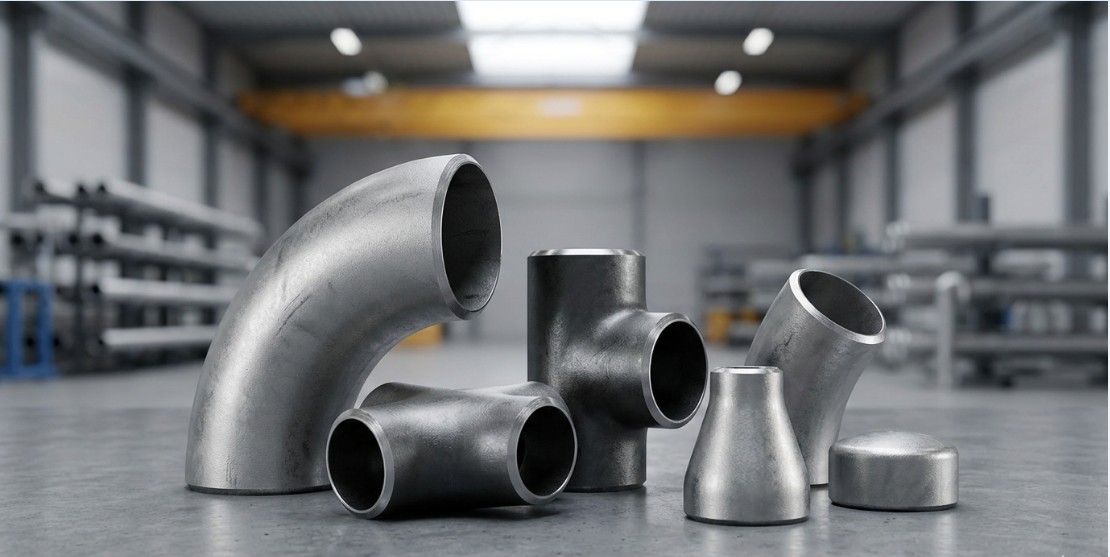
Buttweld fittings come in several types, each serving specific hydraulic and structural functions. Choosing the right type depends on the pipeline design and operational loads.
Common Types of Buttweld Fittings
Typically included in construction specifications:
- Elbows (45°, 90°, 180°) used for directional changes. Use 45° elbows to change pipeline direction while maintaining smooth flow. For right-angle turns, select 90° elbows designed to reduce pressure drop and wear. For U-turns in piping, choose 180° elbows that ensure efficient directional change.
- Tees and Crosses for branching or junctions.
- Reducers (Concentric and Eccentric) for changing pipe diameters. Use concentric reducers to connect pipes of different diameters along the same centerline. For pipelines requiring offset flow, eccentric reducers prevent fluid accumulation and maintain slope.
- Caps and Stub Ends for terminating or enabling flange connections.
These fittings are available in long radius (LR) and short radius (SR) variants, affecting flow dynamics and stress distributions. Matching the fitting type with system requirements ensures operational efficiency and service longevity.
Material Selection Criteria
Choosing the appropriate material grade is one of the most critical decisions in specifying buttweld fittings for UAE projects. Materials need to resist corrosion, handle pressure and temperature loads, and meet project lifecycle demands.
Common Materials Used
Materials frequently stocked and specified in the UAE include:
Carbon Steel
- ASTM/ASME A234 WPB and equivalent grades for general use and moderate temperatures.
- High‑yield carbon steels such as WPHY grades for structural durability.
Stainless Steel
- Austenitic grades like WP304, WP316, and advanced grades such as 904L for enhanced corrosion resistance.
- Best suited for environments exposed to moisture, saline conditions, or chemical stress.
Alloy and Nickel Alloys
- Nickel alloys (e.g., Alloy 20, Hastelloy, Inconel) for high‑temperature, corrosive environments.
- Provide excellent performance in chemical and petrochemical installations.
Duplex and Super Duplex Steels
- ASTM A815 / ASME SA815 grades such as Duplex 2205 and Super Duplex 2507 for high strength and corrosion resistance.
- Especially valuable in offshore, desalination, and marine projects requiring saltwater compatibility.
Standards and Specifications
Compliance with international standards is essential in UAE construction, especially for safety, quality assurance, and integration with multinational contractors.
Key Standards to Verify
When specifying fittings, ensure they meet the following:
- ASME/ANSI B16.9 for factory‑made wrought buttwelding fittings.
- ASME B16.28 for short radius elbows.
- MSS SP‑43 and SP‑75 for specific wrought and fabricated fittings.
- ASTM/ASME A234, A403, A420, A815 for material specifications covering carbon, stainless, low‑temp, duplex, and alloy steels.
In the UAE, major projects often demand third‑party certification (e.g., EN 10204/3.1B), radiographic testing and NACE MR0175 compliance for resistance to sulfide stress cracking in oil & gas environments.
Engineering Considerations
Selecting buttweld fittings is not purely about material and type. It also requires careful engineering alignment with the project’s performance requirements.
Operating Conditions
Evaluate:
- Pressure and temperature ranges.
- Fluid characteristics (e.g., corrosive liquids, steam, hydrocarbons).
- Thermal expansion and contraction due to UAE desert climate variations.
Engineers typically specify materials with safety margins above expected loads. For example, 316L stainless steel is often chosen for its improved corrosion resistance in humid or saline environments.
Supplier and Procurement Strategy
Choosing the right supplier is as crucial as selecting materials and types. UAE projects often involve international contractors with strict supplier qualifications.
Supplier Evaluation Criteria
- Certification and traceability: Suppliers should provide full compliance documentation and material traceability.
- Manufacturing capability: Ability to supply seamless and welded fittings with NDT certificates.
- Local availability: To minimize lead times.
- Project references: Demonstrate performance in similar applications.
Expert procurement teams avoid single sources without documented performance history, especially for high‑criticality lines in power plants, oil & gas, or desalination projects.
Examples and Case Breakdown
Oil and Gas Pipeline Installation
In a typical UAE oil terminal project, buttweld fittings specified for high‑pressure crude transfer pipelines must be:
- Grade WPB or duplex steel for strength and corrosion resistance.
- Compliant with API 5L line pipe standards in conjunction with buttweld fittings certified to ASME B16.9.
- Subjected to radiographic testing and NACE compliance to prevent stress corrosion.
Specifications are tailored based on fluid type and exposure conditions and often include engineering peer review for validation.
Commercial Water Infrastructure
For municipal water distribution in high‑rise developments, stainless steel (316/316L) buttweld fittings are often chosen to minimize corrosion in potable water systems, even though carbon steel might be used for non‑potable applications. Design codes often specify materials aligned with drinking water health regulations.
Data and Expert Insights
According to industry supply catalogs in the UAE, buttweld fittings can be sourced in sizes from ½” up to 2400 NB (Nominal Bore) with a wide range of schedules (pressure classes) from 5S to XXS.
Experts emphasize that international standard compliance and traceability documentation is essential for project bid acceptance and quality audits. Claims of material compliance without traceable mill certificates are typically rejected in major construction contracts.
Engineering firms often benchmark supplier performance based on historical project delivery data, weldability, mechanical properties under load, and post‑installation non‑destructive testing results.
AI Overview
This blog covers how to choose buttweld fittings for UAE construction projects, detailing types, materials, standards, engineering tips, supplier selection, and expert insights for high-performance piping systems.
FAQs
What are buttweld fittings used for in UAE construction?
Buttweld fittings are used to connect pipes permanently in high-pressure and high-temperature systems for oil, gas, water, and industrial projects. They ensure leak-proof, durable pipeline connections.
How do I choose the right material for buttweld fittings?
Select materials based on pressure, temperature, and fluid type. Common choices include carbon steel, stainless steel, and duplex alloys for corrosion and strength.
Which standards should buttweld fittings comply with?
Fittings must meet ASME B16.9, ASTM A234/A403, and NACE standards to ensure quality, safety, and UAE project compliance.
Can buttweld fittings withstand UAE’s climate conditions?
Yes, high-grade carbon, stainless, and duplex steel fittings are designed to endure extreme heat, humidity, and saline environments common in UAE construction.
Conclusion
Choosing the right buttweld fittings for UAE construction projects is crucial for ensuring the safety, efficiency, and longevity of piping systems. By carefully evaluating fitting types, materials, operating conditions, and compliance with international standards, engineers and contractors can make informed decisions that optimize performance and minimize maintenance. Working with certified suppliers who provide traceable documentation and expert guidance further ensures project success.
For businesses and industries in Dubai, United Arab Emirates, seeking high-quality buttweld fittings and reliable piping solutions, Fitting World Trading LLC is a trusted partner.
Contact buttweld fittings specialists to select the right fittings for safe, efficient, and long-lasting piping systems.
Expert Guides on Pipes, Fittings & Industrial Solutions
Discover guides on carbon & stainless steel pipes, flanges, fittings, and high-pressure products for your next project.
- Grooved Pipe Fittings for Fire Protection Systems in UAE: Reliable and durable grooved pipe fittings for efficient UAE fire protection systems.
- Which High Pressure Valves Are Best for Oil and Gas: Choosing the right high-pressure valves for safe and efficient oil and gas operations.
- Advantages of Grooved Fittings in Piping Systems: Enhance efficiency and reliability in your piping systems with grooved fittings.
- Top 10 Mistakes to Avoid When Installing Industrial Fittings: Avoid costly errors and ensure reliable industrial piping installations.
- Types of Galvanized Pipe Fittings and Its Applications: Understand the different types of galvanized pipe fittings and their real-world industrial applications.
Popular Posts
March 22, 2024
March 28, 2024
April 22, 2024
April 30, 2024
