


Offcanvas top
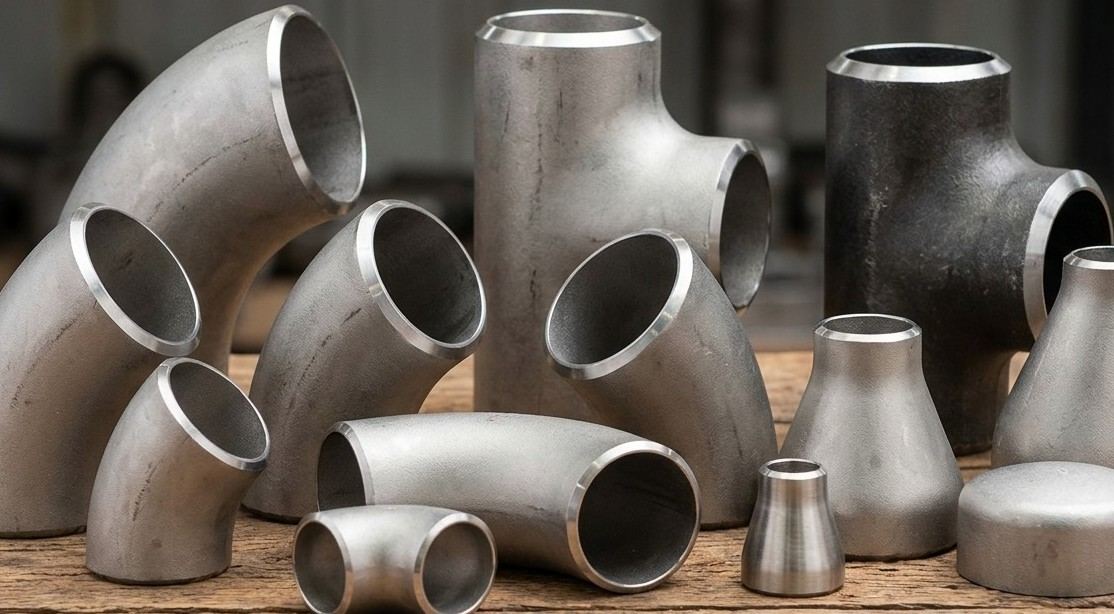
5 Critical Factors to Consider When Choosing Buttweld Fittings
Every piping system depends on the smallest connections to hold up under real pressure. Buttweld fittings are the parts that keep pipelines sealed, aligned and safe, whether the system is carrying crude oil, steam or process chemicals. Get the selection wrong and you are looking at leaks, corrosion and unplanned shutdowns down the line.
If you work in oil and gas, petrochemical, construction or marine projects across the UAE, you already know that fittings are not a place to cut corners. Below are the five factors that actually matter when picking buttweld fittings, along with practical guidance you can apply on your next project.
Material Compatibility With Your Piping System
The material of the fitting has to match the pipe and the fluid running through it. This single decision affects strength, corrosion resistance and how long the joint lasts once it is welded into place.
Most industrial projects use one of three material families.
- Carbon steel works well for high temperature and high pressure lines where cost efficiency matters
- Stainless steel resists corrosion and suits chemical processing plants and food grade systems
- Alloy steel handles extreme temperature and strength demands found in refineries and power plants
Here is a quick way to compare the three at a glance.
| Material | Best Suited For | Key Advantage |
|---|---|---|
| Carbon Steel | Oil, gas, and general industrial piping | High strength at lower cost |
| Stainless Steel | Chemical, marine, and food processing lines | Strong corrosion resistance |
| Alloy Steel | High-temperature refinery and power systems | Performs well under extreme heat |
Choosing a mismatched material almost always shows up later as scaling, pitting or premature failure at the weld joint. If you need help matching a fitting grade to your pipe specification, browse the buttweld fittings supplier in UAE range for stocked material options.
Selecting The Right Fitting Type For The Application
Buttweld fittings are not one size fits all. Each type serves a distinct function in the piping layout, and picking the wrong one creates flow restrictions or unnecessary stress on the system.
The common types you will come across include
- Elbows for changing pipe direction at 45 or 90 degrees
- Tees for branching flow off the main line
- Reducers for connecting pipes of different diameters
- Caps for sealing the end of a pipeline
- Stub ends for creating removable connections with lap joint flanges
For tighter layouts or where flow needs to stay smooth, long radius elbows are usually the better pick over short radius versions since they reduce turbulence and pressure drop. If you want a deeper look at how direction changing fittings perform in real systems, this guide on elbow pipe fittings types and applications breaks it down further.
Dimensional Accuracy And Industry Standards
A fitting can be made from the right material and still cause problems if the dimensions are off. Outer diameter, wall thickness and beveling all need to line up precisely with the pipe for a clean weld.
This is where recognized standards come in. Fittings manufactured to ASME B16.9 or ASTM specifications are tested for consistent dimensions, which makes welding faster and reduces the chance of leaks at the joint. Always confirm the pipe schedule as well, since fittings are sized to match a specific wall thickness and an unspecified schedule usually defaults to standard wall, which may not be what your project needs.
Getting the installation right is just as important as getting the sizing right. Our post on threadolet fitting installation best practices covers techniques that apply broadly to buttweld connections as well.
Pressure And Temperature Ratings
Every buttweld fitting has a working limit, and pushing past it is one of the fastest ways to compromise a piping system. The pressure rating depends on the wall thickness and material grade, so this factor ties directly back to your material and schedule choices.
Before finalizing an order, check the following
- Pressure class rating against your system design pressure
- Maximum allowable working pressure under operating conditions
- Both the operating and design temperature range for the application
Underrated fittings do not usually fail immediately. They tend to develop stress cracks over months or years of cyclical pressure, which makes this factor easy to overlook during initial procurement. Safety critical components like valves face the same scrutiny, and our article on safety valve insights for UAE industrial processes explains why rated components matter across an entire system, not just at the fitting level.
Manufacturer Reputation And Quality Assurance
Even a perfectly specified fitting is only as reliable as the manufacturer behind it. Quality control separates fittings that perform for decades from ones that fail within a year.
Look for suppliers who provide
- Third party testing and certified material test reports
- Recognized quality certificates such as ISO 9001
- Full traceability from raw material to finished fitting
- Consistent stock availability and responsive after sales support
A supplier’s track record tells you a lot before you even place an order. Ask for documentation on past projects and check whether their certifications are current rather than expired. The same due diligence applies when sourcing other piping components, and our guide on factors to consider when buying industrial hose fittings walks through a similar evaluation process for hose based connections.
Comparing The Five Factors At A Glance
| Factor | What to Check | Why It Matters |
|---|---|---|
| Material Compatibility | Pipe and fluid compatibility | Prevents corrosion and scaling |
| Fitting Type | Elbow, tee, reducer, or cap function | Matches flow and layout needs |
| Dimensional Accuracy | ASME or ASTM conformance | Ensures clean, strong welds |
| Pressure and Temperature | MAWP and design temperature | Avoids stress cracks and bursts |
| Manufacturer Quality | Certifications and traceability | Reduces defect and failure risk |
Final Thoughts On Choosing Buttweld Fittings
Selecting the right buttweld fittings comes down to matching material grade fitting type dimensional accuracy pressure rating and manufacturer quality to the actual conditions your piping system will face. Getting each of these factors right reduces leaks premature wear and unplanned downtime across oil gas petrochemical and construction projects.
Fitting World Trading LLC stocks a wide range of buttweld fittings built for demanding industrial piping applications across Dubai the UAE and the GCC.
Ready to get started? Reach out to our team today for technical advice or a fast quote.
Expert Guides on Industrial Insights
If you want to deepen your understanding of industrial equipment, material handling, and engineering best practices, explore these related articles.
- Everything You Need To Know About Grooved Pipe Fittings – A complete walkthrough of grooved fitting types, uses, and installation steps.
- Complete Guide to Camlock Fittings Types Uses and Material Selection – How to pick the right camlock fitting type and material for your application.
- The Ultimate Guide to Lifting and Rigging Equipment – An overview of lifting and rigging gear used across industrial sites.
- Top 10 Essential Electrical Components and How to Choose Them – A rundown of key electrical components for industrial installations.
- Understanding the Difference Between Lifting and Rigging – Clearing up how lifting and rigging differ in day to day industrial work.
Popular Posts
March 22, 2024
March 28, 2024
April 22, 2024
April 30, 2024
