


Offcanvas top
Complete Guide to Camlock Fittings Types Uses and Material Selection
Camlock fittings are among the most trusted quick connect couplings used across industrial fluid transfer systems. Known as cam and groove couplings, they allow operators to join hoses and pipes in seconds without tools or clamps.
From oilfield operations to food processing lines, these fittings deliver a fast, leak free connection that keeps operations moving. This guide breaks down the types, materials, sizes and everything you need to know before you buy.
What Are Camlock Fittings?
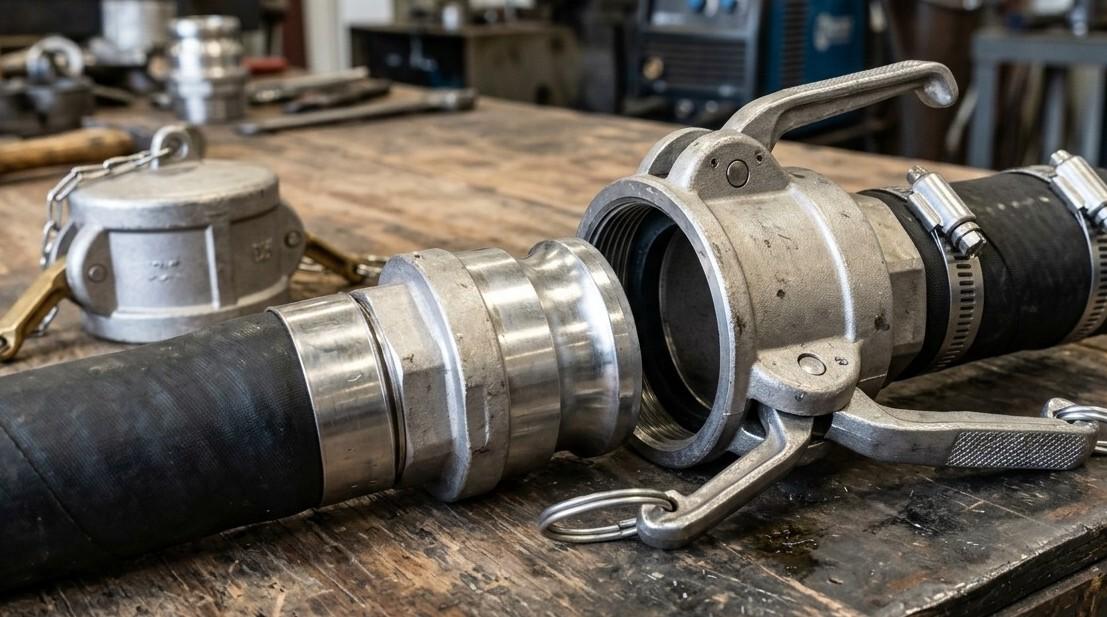
A camlock fitting is a two piece connector made up of a male adapter and a female coupler. The female end has hinged cam arms that lock securely over the groove on the male adapter.
Folding the arms down creates a tight seal in one simple motion. There is no threading, no bolting and no need for specialized tools, which is why these couplings are so popular where hoses are connected and disconnected many times a day.
How Camlock Couplings Work?
The operating principle is straightforward. The male adapter is inserted into the female coupler, and the operator folds the cam arms down into the closed position.
This locks the two halves together and compresses the internal gasket to form a leak proof seal. To disconnect, the arms are lifted and the adapter pulls free, needing only hand pressure and no tools. This same simplicity is why our article on why camlock fittings are ideal for industrial use ranks them ahead of threaded connections for high frequency hose changes.
Types of Camlock Fittings Explained
Camlock couplings are identified by a standardized letter system, from Type A through Type F, along with dust caps and plugs for protection during storage.
| Type | Configuration | Common Use |
|---|---|---|
| Type A | Male adapter with female thread | Connecting to threaded pipe outlets |
| Type B | Female coupler with male thread | Connecting to threaded pipe inlets |
| Type C | Female coupler with hose tail | Attaching to flexible hose ends |
| Type D | Female coupler with female thread | Threaded pipe to pipe connections |
| Type E | Male adapter with hose tail | Attaching to flexible hose ends |
| Type F | Male adapter with male thread | Threaded to threaded connections |
| DC and DP | Dust cap and dust plug | Protecting open ends during storage |
Matching the correct type to your hose or pipe end is the first step toward a safe connection. Using the wrong configuration is one of the most common causes of leaks in fluid transfer systems.
Choosing the Right Camlock Material
Material selection has a direct impact on how well a camlock fitting performs against pressure, temperature and the fluid being transferred.
- Aluminium camlock fittings are lightweight and cost effective, making them a strong choice for water, fuel and general purpose transfer
- Stainless steel camlock fittings offer excellent corrosion resistance and suit chemical, marine and food grade applications
- Brass camlock fittings handle petroleum products and mild chemicals well and are common in fuel systems
- Polypropylene camlock fittings resist aggressive chemicals and are a lighter, budget friendly option for agriculture and water transfer
The gasket material also needs attention. EPDM suits water and mild chemicals, Buna N suits oils and fuels, and Viton is the preferred choice for high temperature or aggressive chemical service.
Camlock Size and Pressure Rating Guide
Camlock fittings typically range from half an inch up to six inches. The size chosen should always match the internal diameter of the connected hose or pipe.
Most camlock couplings carry a standard operating pressure rating. Confirm that the fitting you select comfortably exceeds your system’s maximum working pressure and temperature, since undersized or mismatched fittings are a leading cause of pressure loss and premature wear.
Threaded camlock ends also need to match your existing pipework, and NPT and BSP threads are not interchangeable. If you are unsure which standard your system uses, our guide on the difference between BSPT and NPT thread fittings shows how to tell them apart before you order.
Industries That Depend on Camlock Fittings
Camlock couplings are used wherever fluids need to move quickly and safely between hoses, tanks and pipelines.
- Oil and gas operations rely on camlocks for fluid transfer, tank loading and mud circulation
- Chemical processing plants use them for tanker loading and temporary maintenance connections
- Food and beverage facilities depend on stainless steel camlocks for sanitary ingredient transfer
- Agricultural operations use them for irrigation, spraying and general water handling
- Construction sites use camlocks for dewatering and dust suppression
Maintenance Tips for Long Service Life
Routine care extends the working life of any camlock coupling and prevents unplanned downtime.
- Inspect cam arms, gaskets and sealing surfaces regularly for wear or damage
- Depressurize the system fully before disconnecting any fitting
- Replace gaskets as soon as cracking or deformation appears
- Store unused fittings with dust caps or plugs to keep debris out
- Apply food grade lubricant to cam hinges where recommended to keep movement smooth
Poor installation is behind many of these failures before wear even becomes a factor. Our guide on common installation mistakes that damage industrial fittings covers the errors most likely to shorten a camlock coupling’s service life.
Why Work With an Experienced Camlock Fittings Supplier
Sourcing couplings from a knowledgeable camlock fittings supplier makes selection far easier, especially when a project involves multiple materials, sizes and pressure requirements.
An experienced supplier can confirm chemical compatibility, recommend the right gasket and ensure every fitting meets recognized industrial standards before it reaches your site. This saves time and reduces the risk of costly leaks later.
Conclusion
Camlock fittings remain one of the fastest and most dependable ways to connect and disconnect hoses across oil and gas, chemical, food and agricultural operations. Getting the type, material, size and pressure rating right from the start keeps a fluid transfer system safe and efficient for years to come.
For certified, high quality camlock fittings and piping components across the UAE and GCC, FW Trading LLC supplies a comprehensive inventory tailored to your project’s pressure and material needs. Ready to get started? Contact us today for technical guidance or a quick quote.
Expert Guides on Industrial Insights
If you want to deepen your understanding of industrial fittings, piping systems, and engineering best practices, explore these related articles:
- Which High Pressure Valves Are Best for Oil and Gas – Choosing the right high pressure valves for safe and efficient oil and gas operations.
- Buttweld vs Threaded Fittings: Which Is Better for Piping – A side by side comparison to help you decide between welded and threaded pipe connections.
- I Tested CS vs SS Buttweld Fittings for 30 Days – Hands on results comparing corrosion, strength, and maintenance between carbon steel and stainless steel fittings.
- Rigid vs Flexible Grooved Couplings – A comprehensive guide to choosing the right coupling type for fire protection, HVAC, and industrial piping.
- Why Grooved Fittings Are a Smart Choice for Piping Systems – Understand the advantages of grooved fittings in modern piping networks, including speed and efficiency.
Popular Posts
March 22, 2024
March 28, 2024
April 22, 2024
April 30, 2024
