


Offcanvas top
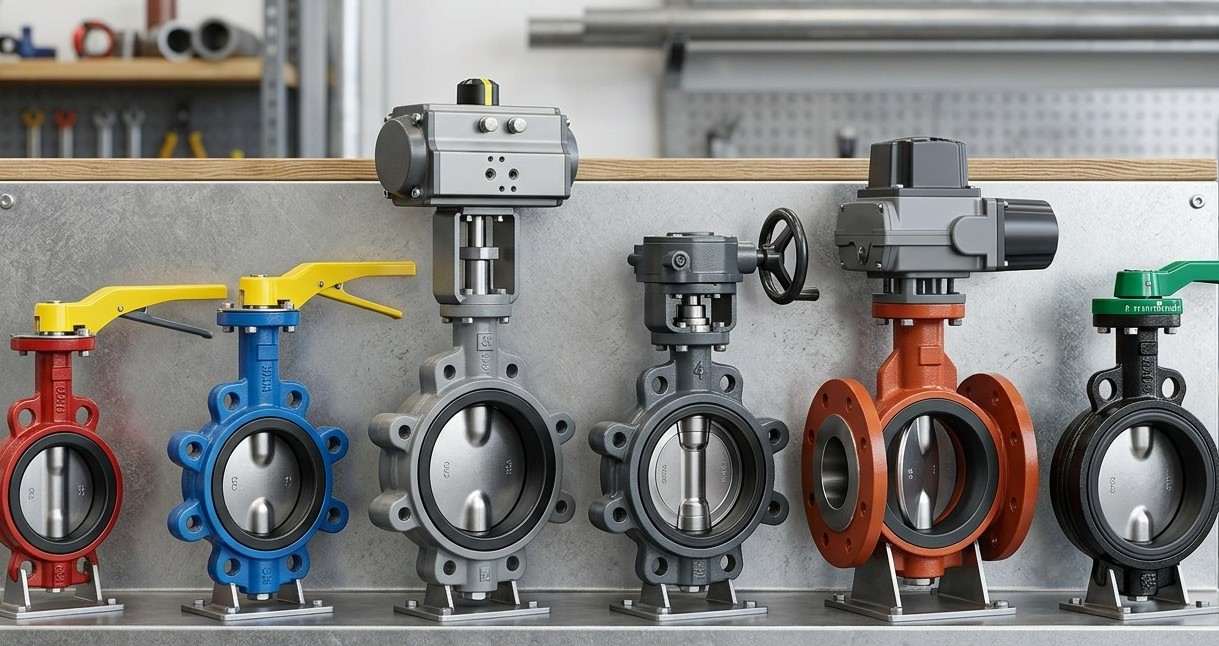
Butterfly Valves: Types, Uses & Benefits Guide
Butterfly valves are widely used in water supply, HVAC, chemical processing, food processing, power generation, and industrial piping systems. Their compact design, simple operation, and suitability for large pipe sizes make them a practical choice for many flow control applications.
A butterfly valve uses a rotating disc to control or stop the movement of liquids, gases, and other media. The disc rotates around a shaft, allowing the valve to open, close, or regulate flow. As a quarter-turn valve, it typically rotates 90 degrees between fully open and fully closed positions.
What Is a Butterfly Valve?
A butterfly valve is a rotary valve designed for flow control and isolation. Its main components include the valve body, disc, stem, and seat.
When the valve is fully open, the disc turns parallel to the flow, creating a relatively open passage. When closed, the disc rotates against the seat to stop the flow.
The compact design of butterfly valves makes them useful in systems where installation space is limited. Wafer butterfly valves, for example, are installed between pipe flanges and require less space than many conventional valve designs.
How Does a Butterfly Valve Work?
The operating principle is simple. A handle, gearbox, pneumatic actuator, or electric actuator rotates the valve stem, which turns the disc inside the pipe.
- Fully open: The disc allows maximum flow.
- Partially open: The disc restricts flow.
- Fully closed: The disc blocks the passage.
This quarter-turn operation also makes butterfly valves suitable for automated piping systems.
Main Parts of a Butterfly Valve
Understanding the main butterfly valve parts can help when selecting a valve.
- Valve body: Connects the valve to the piping system and houses the internal components.
- Disc: Rotates inside the pipe to control fluid movement.
- Stem: Transfers movement from the handle or actuator to the disc.
- Seat: Creates a sealing surface when the valve closes.
- Actuator: Provides manual or automatic operation. Common options include levers, gearboxes, pneumatic actuators, and electric actuators.
Types of Butterfly Valves
Different butterfly valve types are designed for different piping requirements.
Wafer Butterfly Valve
A wafer butterfly valve fits between two pipe flanges. Its compact design makes it suitable for installations where space is limited.
Lug Butterfly Valve
Lug-style valves have threaded lugs around the body. They are useful where sections of a piping system may need to be isolated or removed independently.
Flanged Butterfly Valve
Flanged butterfly valves connect directly to matching pipe flanges and are commonly used in larger industrial piping systems.
Double Offset Butterfly Valve
A double offset butterfly valve moves the disc away from the seat during much of its rotation. This reduces contact between the disc and seat and can help reduce wear.
Common Butterfly Valve Materials
Butterfly valve materials vary depending on the valve component and operating conditions.
Common body and disc materials include:
- Cast iron
- Ductile iron
- Carbon steel
- Stainless steel
- Aluminium bronze
Common seat and lining materials include:
- EPDM
- NBR
- PTFE
The appropriate combination depends on the fluid, pressure, temperature, corrosion requirements, and application. Always check the manufacturer’s specifications before selecting the valve.
Butterfly Valve Applications
Butterfly valves are used in many industrial and commercial systems, including:
- Water treatment plants
- Water distribution systems
- HVAC systems
- Cooling water lines
- Fire protection systems
- Chemical processing
- Food and beverage processing
- Power generation
- Industrial process piping
Their lightweight and compact construction makes them particularly useful for large pipelines.
Advantages of Butterfly Valves
Butterfly valves offer several benefits:
Compact design: They require less installation space than many traditional valve types.
Lightweight construction: Their simple design can reduce weight, especially in large pipe sizes.
Quick operation: Quarter-turn operation allows fast opening and closing.
Easy automation: Pneumatic and electric actuators can provide remote operation.
Large size availability: Butterfly valves are widely available for large-diameter piping systems.
How to Choose the Right Butterfly Valve
Consider these factors before selecting a butterfly valve:
- Fluid type: Identify whether the valve will handle water, air, chemicals, slurry, or another medium.
- Pressure and temperature: Check the valve’s pressure-temperature rating.
- Valve size: Match the valve to the required flow rate and piping system.
- Material: Select body, disc, and seat materials compatible with the application.
- Connection type: Choose wafer, lug, or flanged construction based on the piping system.
- Actuation: Decide between manual, pneumatic, or electric operation.
- Flow control: If throttling is required, check the valve’s flow characteristics and sizing data.
Butterfly Valves vs Gate Valves
Butterfly valves and gate valves are both commonly used for flow isolation, but they work differently.
A butterfly valve uses a rotating disc and operates with a quarter turn. A gate valve uses a gate that moves vertically to open or close the flow path.
Butterfly valves are generally more compact and lightweight, making them useful for large pipelines and systems with limited space. Gate valves may be preferred for applications requiring a full, unobstructed flow path when open.
Final Thoughts
Butterfly valves are a practical option for flow control and isolation in many piping systems. Their compact design, quarter-turn operation, and range of materials and actuation options make them suitable for different industrial applications.
When sourcing compatible piping components, a pipe fittings supplier in UAE such as Fitting World Trading LLC can help with product selection based on project requirements. For specific product or application questions, contact our team.
Expert Guides on Industrial Insights
- Everything You Need To Know About Grooved Pipe Fittings – A complete walkthrough of grooved fitting types, uses, and installation steps.
- Complete Guide to Camlock Fittings Types Uses and Material Selection – How to pick the right camlock fitting type and material for your application.
- The Ultimate Guide to Lifting and Rigging Equipment – An overview of lifting and rigging gear used across industrial sites.
- Top 10 Essential Electrical Components and How to Choose Them – A rundown of key electrical components for industrial installations.
- Understanding the Difference Between Lifting and Rigging – Clearing up how lifting and rigging differ in day to day industrial work.
Popular Posts
March 22, 2024
March 28, 2024
April 22, 2024
April 30, 2024
