


Offcanvas top
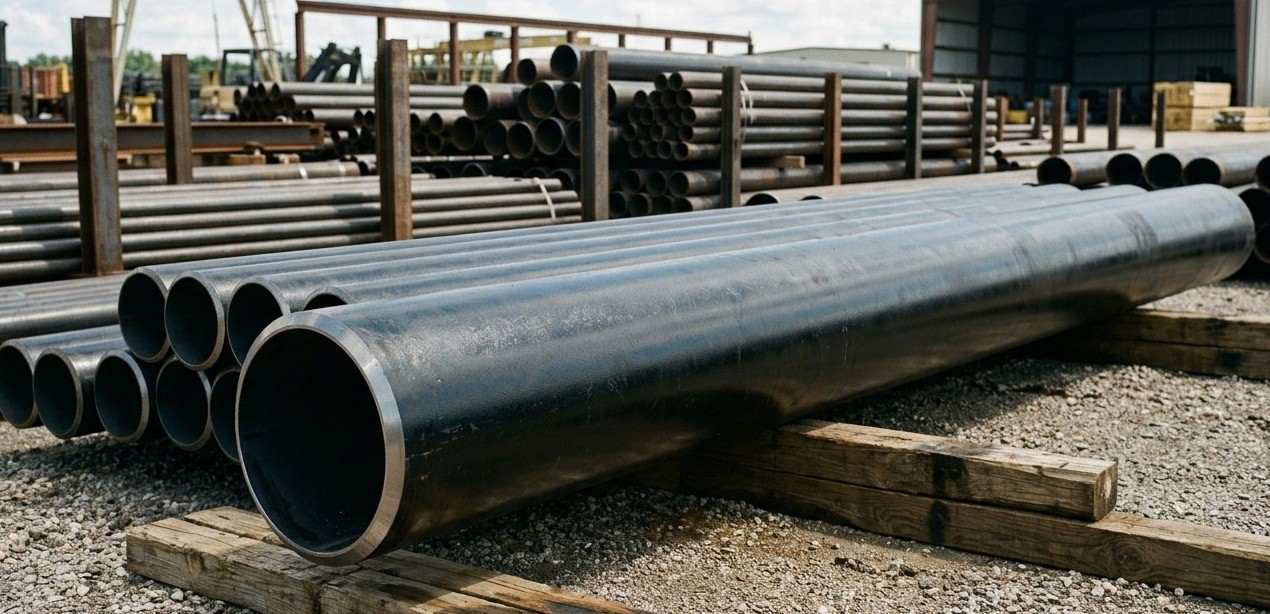
Carbon Steel Pipe: Types, Sizes, Uses & Benefits
Carbon steel pipe is a durable, high-strength industrial tube made primarily from iron and carbon. It moves liquids and gases in oil, power, water, and construction projects. It is available as seamless or welded pipe, follows ASTM and API standards, and costs less than alloy steel, though it needs protection against corrosion.
Few materials cause as many costly surprises as a poorly specified pipe. The wrong grade, wall thickness, or coating leads to leaks, corrosion failures, and project delays.
This guide covers types, sizes, uses, and benefits, and shows how to evaluate carbon steel pipe suppliers in UAE.
What Is a Carbon Steel Pipe?
A carbon steel pipe is a tubular product made from iron with 0.05% to 1.0% carbon, manufactured to ASTM A53, ASTM A106, or API 5L standards. It carries liquids, gases, and slurries under pressure in industrial plants, pipelines, and buildings, where strength and weldability matter more than corrosion resistance.
Carbon content drives performance. Grades below 0.30% carbon are ductile and easy to weld, so most piping uses them. Higher carbon raises strength but reduces weldability.
What Are the Main Types of Carbon Steel Pipe?
Seamless and welded pipe are the two main types. Seamless pipe is pierced from a solid billet and has no weld seam, while welded pipe is rolled from plate or coil and joined by electric resistance welding (ERW) or submerged arc welding (SAW).
How Does Seamless Pipe Perform?
Seamless pipe has no longitudinal weld, so it handles high pressure and temperature more reliably in critical service. ASTM A106 Grade B dominates refinery and power plant work, though cost and lead time run higher than welded options for the same size.
When Should You Choose Welded Pipe?
Choose welded pipe for lower-pressure lines, structural work, and large diameters, where its lower cost and shorter lead time give a clear advantage. ERW pipe suits utility, water, and structural lines, while SAW pipe covers large-diameter oil and gas transmission pipelines.
Modern weld inspection and heat treatment have narrowed the performance gap with seamless pipe.
What Are the Standard Carbon Steel Pipe Sizes?
Carbon steel pipe sizes follow nominal pipe size (NPS) in inches or diameter nominal (DN) in millimetres, paired with a wall thickness schedule under ASME B36.10M. Outside diameter stays fixed for each size, while schedules such as Sch 40, Sch 80, and XXS change the wall thickness.
For example, NPS 6 corresponds to DN 150. Every order depends on four variables:
- Grade: ASTM A53 Grade A or B, A106 Grade B, or API 5L X42 to X70
- Size and schedule: NPS or DN plus wall thickness
- End finish: plain, beveled, or threaded
- Coating: black, galvanized, epoxy, or polyethylene
Where Is Carbon Steel Pipe Used?
This pipe serves oil and gas transmission, water distribution, power generation, petrochemical processing, and construction. In the UAE, demand centers on oil and gas, desalination and water networks, and large building and infrastructure projects, with each sector favoring a different grade and coating.
- Oil and gas: API 5L line pipe
- Power: A106 seamless pipe for steam headers
- Water: lined or coated pipe for mains
- Fire protection: A53 black or galvanized pipe
- Construction: piling and structural supports
What Are the Benefits of Carbon Steel Pipe?
This material offers high tensile strength, easy fabrication, broad availability, and lower cost than stainless or alloy steel. These traits shorten lead times and reduce lifecycle cost on pressure systems where corrosion is manageable and a protective coating or lining is practical.
- Strength: high pressure ratings at moderate wall thickness
- Weldability: field welding with standard procedures
- Cost efficiency: lower cost per meter than alloys
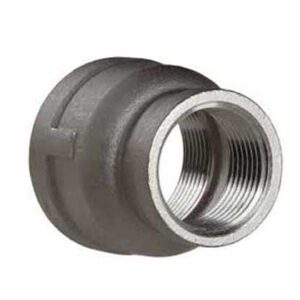
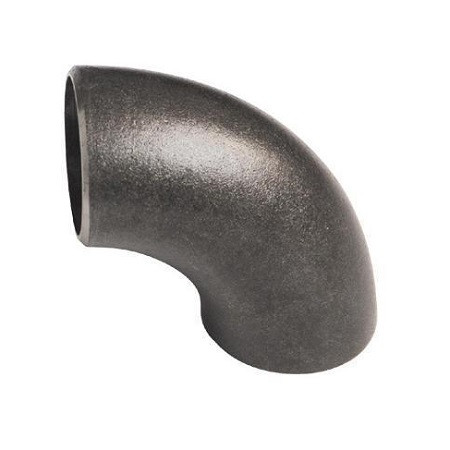
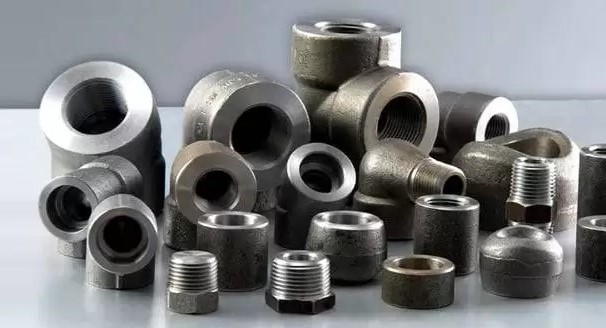
- Fitting compatibility: carbon steel pipe fittings such as elbows, tees, reducers, and flanges are easy to source
What Affects Carbon Steel Pipe Price?
Price depends on raw steel cost, manufacturing method, grade, size, coating, and prevailing steel market conditions. Seamless pipe costs more than welded, and heavier schedules cost more per meter, while volume, certification, and shipping also change the final quote for each order.
Request quotes against a fixed specification so offers are comparable. A low unit price can hide thinner walls, missing certificates, or weak traceability.
What Are the Limitations of Carbon Steel Pipe?
The main limitation of this material is corrosion, which affects both external surfaces and internal bores over time. Without protection, carbon steel rusts in moist, acidic, or chloride-rich environments, and toughness drops at cryogenic temperatures unless an impact-tested grade is specified.
- Galvanized or epoxy coatings for external protection
- Cement-mortar or polymer linings for internal protection
- Cathodic protection for buried lines
- ASTM A333 grades for low-temperature service
Sour service containing hydrogen sulfide requires compliance with NACE MR0175/ISO 15156.
How Do You Choose Carbon Steel Pipe Suppliers in UAE?
Choose suppliers by checking certified mill test reports, stock depth across grades and sizes, and heat number traceability. A reliable supplier also provides matching fittings, clear lead times, and documented hydrostatic test results, which reduces the risk of rejected material at your site.
Buyers in the UAE should also confirm that material meets the project specifications set by operators and consultants, and that documents are ready for third-party inspection. Use this checklist before ordering:
- Certification: request EN 10204 Type 3.1 mill test certificates.
- Range: confirm stock of your grade, size, and schedule.
- Compatibility: verify matching fittings and flanges.
- Standards: specify ASTM, API, or the project code.
- Logistics: confirm delivery timelines and packing.
Final Thoughts on Carbon Steel Pipe
This material remains the most practical choice for most pressure and structural applications. Its strength, weldability, and cost profile are hard to match, provided corrosion and temperature limits are addressed in the specification.
Before you request quotes, lock down five details: grade, nominal size, schedule, coating, and test certificates. Fixing these upfront keeps price comparisons fair and stops mismatched pipe and fittings from reaching your site.
Get the right carbon steel pipe for your project
Want a second opinion on your specification? Fitting World Trading LLC’s team can review your grade, size, and schedule requirements and recommend suitable pipe and fittings.
Frequently Asked Questions
Is black pipe the same as carbon steel?
Black pipe is carbon steel with an uncoated, dark iron-oxide finish, produced to standards such as ASTM A53. It is common in gas lines and fire sprinkler systems, while galvanized pipe carries an added zinc coating for corrosion resistance in outdoor and water service.
What is the difference between ASTM A53 and A106 pipe?
ASTM A53 covers both seamless and welded pipe for general pressure and mechanical use, while ASTM A106 covers seamless pipe only. A106 targets high-temperature service and applies tighter chemistry controls, which makes it the preferred choice for steam and refinery lines.
Can carbon steel carry potable water?
Carbon steel can carry potable water when the pipe is lined with cement mortar or approved epoxy, which prevents rust and protects water quality. Specify NSF/ANSI 61 certified linings and confirm standards such as AWWA C205 and local regulations before using it for drinking water.
Popular Posts
March 22, 2024
March 28, 2024
April 22, 2024
April 30, 2024
