


Offcanvas top
Slip-On vs Blind Flanges Compared and How to Choose One
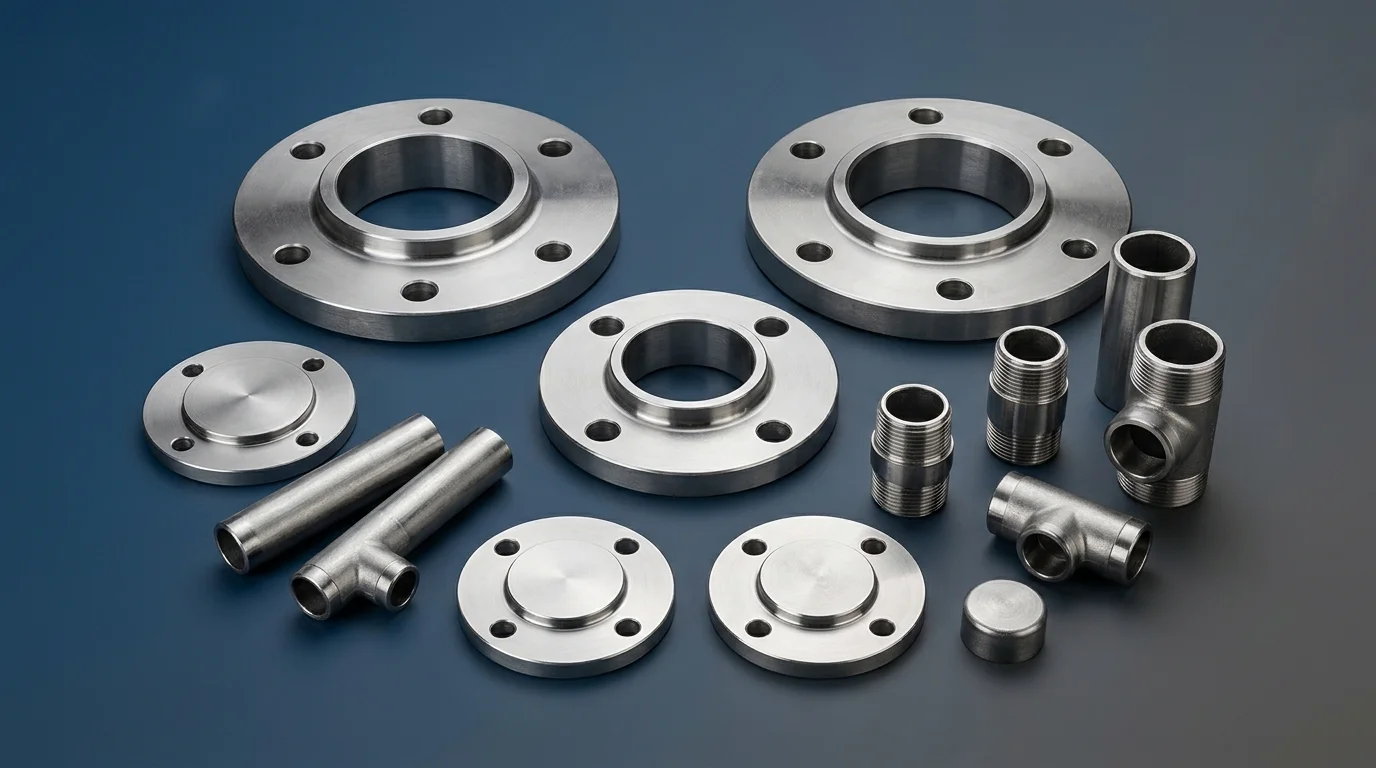
A slip-on flange slides over the pipe and is welded in place, so it connects pipe to equipment in low and medium pressure lines. A blind flange is a solid disc that bolts on to close a line end, isolate a section or leave room for future expansion. This guide covers how each one works, where it fits, how they compare on pressure, weight, cost and upkeep, and a simple checklist to help you pick the right one.
Every piping system needs two kinds of flanges, the ones that connect and the ones that close. Slip-on vs blind flanges is a common comparison because both are widely stocked, both follow the same standards, and both end up on the same drawings. They just do opposite jobs.
Picking the wrong one rarely fails on day one. It shows up later as a leak at the weld, a flange that cannot be removed, or a hydrotest that has to be repeated. A few minutes spent understanding the difference saves a lot of rework on site.
What Is the Difference Between Slip-On vs Blind Flanges?
A slip-on flange has a hole through the middle and slides over a pipe, so it joins pipes and equipment while letting fluid flow. A blind flange is a solid disc with no bore, so it closes the end of a line. One connects, the other seals.
That single difference drives everything else. Because a slip-on flange sits on the pipe, it is welded and stays put. Because a blind flange only bolts to a mating flange, it can come off and go back on whenever the line needs to be opened.
Both types are made to ASME B16.5 for sizes up to NPS 24, and ASME B16.47 for larger sizes. You can read the scope of the standard on the ASME B16.5 standard page.
What Is a Slip-On Flange?
A slip-on flange is a ring-shaped flange that slides over the outside of a pipe and is welded in place with two fillet welds, one inside and one outside. It suits low to medium pressure lines such as cooling water and general utility service.
The pipe is set slightly back from the flange face so the inside weld does not interfere with the gasket. The loose fit makes alignment easy, which is why fitters like them on site.
Where slip-on flanges work well
- Cooling water, firewater and utility lines
- Low and medium pressure piping, usually Class 150 and 300
- Jobs where budget and fast fit-up matter
Where they fall short
- Lower fatigue resistance than a weld neck flange
- Not recommended for severe cyclic, high-temperature or cryogenic service
- Two welds to make, and the inside weld can trap moisture in corrosive fluids
Material choice matters too. Carbon steel slip-on flanges are usually forged to ASTM A105, and stainless grades follow ASTM A182. The ASTM International site lists the material specifications if you need to confirm a grade.
What Is a Blind Flange?
A blind flange is a solid disc with bolt holes and no center opening. It is bolted to a mating flange to close a pipe end, a valve outlet or a vessel nozzle, and it can be removed later for inspection, testing or future expansion.
Because it has no bore, a blind flange carries the full pressure load across its face. That is why it is thick, heavy and made in the same pressure classes as the rest of the system, from Class 150 up to Class 2500 in ASME B16.5.
Typical uses for blind flanges
- Closing the end of a pipeline or header
- Sealing unused nozzles on vessels and tanks
- Hydrostatic testing of a section of pipe
- Leaving a tie-in point ready for a future extension
The trade-off is weight. A large blind flange can be hard to lift and needs proper support, and bolting torque climbs quickly with size and class.
How Do the Two Flanges Compare Side by Side?
Slip-on flanges are welded, lighter and cheaper, and they keep the line open. Blind flanges are bolted, heavier and more expensive at large sizes, and they shut the line. Both follow ASME B16.5 up to NPS 24, but they serve opposite jobs in the piping layout.
| Feature | Slip-On Flange | Blind Flange |
|---|---|---|
| Main job | Connects pipe and equipment | Closes a pipe end or nozzle |
| Design | Has a bore and slides over the pipe | Solid disc with no bore |
| Attachment | Two fillet welds | Bolted to a mating flange |
| Pressure use | Generally low to medium | Depends on pressure class and design |
| Facings | Raised face or flat face | Raised face, flat face, or RTJ |
| Weight and cost | Generally lighter and less expensive | Weight and cost increase with size and rating |
| Removal | Welds must be cut | Can be unbolted and reused if suitable |
| Limits | May be unsuitable for severe cyclic service | Requires adequate support and correct bolting |
How Do You Choose Between a Slip-On and a Blind Flange?
Choose a slip-on flange when you need to join pipe or equipment in a low to medium pressure line. Choose a blind flange when you need to close an end, isolate a section or leave room for a future tie-in. Check pressure class, temperature, service type and maintenance plans before ordering.
Here is a quick five-point check you can run before you finalize the order.
- Does the line need to stay open? If yes, you need a flange with a bore. If the end must be closed, you need a blind.
- What is the pressure class? Slip-on flanges are mostly used in Class 150 and 300. Higher classes usually call for weld neck flanges.
- Is the service cyclic or critical? Vibration, thermal cycling and hazardous fluids rule out slip-on flanges.
- Will it be opened often? Blind flanges are made for that. Slip-on welds are not.
- What is the budget and weight limit? Slip-on is lighter and cheaper. A big blind flange may need a hoist and extra support.
In many real projects, you will use both. A slip-on flange connects the pipe to a valve, and a blind flange closes the spare outlet beside it. Slip-on vs blind flanges is rarely an either-or decision across a whole plant, so it helps to order flanges for the full line list in one go.
What Mistakes Do Buyers Make With Slip-On and Blind Flanges?
The most common mistakes are using slip-on flanges in cyclic or high-risk service, ordering a blind flange in a lower class than the line, and skipping the inside fillet weld. Each one leads to leaks, cracks or failed hydrotests that cost far more than the flange itself.
- Mixing pressure classes. A Class 150 blind flange cannot close a Class 300 line.
- Wrong facing. A raised face flange bolted to a flat face flange can crack the casting.
- Uneven bolting. Blind flanges carry the full end load. Tighten bolts in a crisscross pattern and in several passes.
- Ignoring material match. Stainless pipe with a carbon steel flange invites corrosion at the weld.
Conclusion
Slip-on vs blind flanges comes down to one simple question. Does the line need to stay open or be closed? Slip-on flanges connect pipe and equipment at a lower cost. Blind flanges seal ends, isolate sections and make future expansion easy. Check your pressure class, service and maintenance plan, and the choice becomes clear.
If you are sourcing flanges for your next project, Fitting World Trading LLC can help you match the right type, class and material to your project.
Get the right flanges for your piping job
Whether you need slip-on flanges for a utility line or blind flanges for closures and testing, our team will check your specification and recommend the right size, class and material. You get a clear quote with no guesswork.
FAQs
Can a slip-on flange be used for high-pressure lines?
Slip-on flanges are meant for low to medium pressure service, mostly Class 150 and 300. For high pressure, high temperature or cyclic loads, a weld neck flange is the safer choice because it handles stress and fatigue better.
Why are blind flanges used in piping systems?
Blind flanges close the end of a pipeline, seal unused nozzles and isolate sections for hydrostatic testing. They also leave a ready tie-in point, so the system can be extended later without cutting or re-welding the existing pipe.
Can a blind flange replace a slip-on flange?
No. A blind flange has no bore, so it blocks flow and cannot connect two pipes. It can only close an end. If the line must carry fluid, you need a flange with an opening, such as a slip-on or
Expert Guides on Industrial Insights
If you want to go deeper into fittings selection, materials, and piping best practices, these guides from our blog cover related ground.
- Blind Flange: What It Is, Uses & How It Works: What a blind flange is, how it closes a line, and where it is used.
- Key Factors to Consider When Choosing the Right Flange: How pressure class, material, and service conditions decide the right flange.
- 9 Common Causes of Flange Leaks in Piping Systems: Why flange joints leak and how to fix each cause.
- Flange Inspection and Testing Guide for Industrial Uses: Which checks and tests keep flanges performing and prevent shutdowns.
- How to Select the Right Gasket for Industrial Applications: How to match gasket type and material to pressure, temperature, and fluid.
Popular Posts
March 22, 2024
March 28, 2024
April 22, 2024
April 30, 2024
