

Offcanvas top

Industrial Digital Twins: Revolutionizing UAE’s Piping & Valve Systems

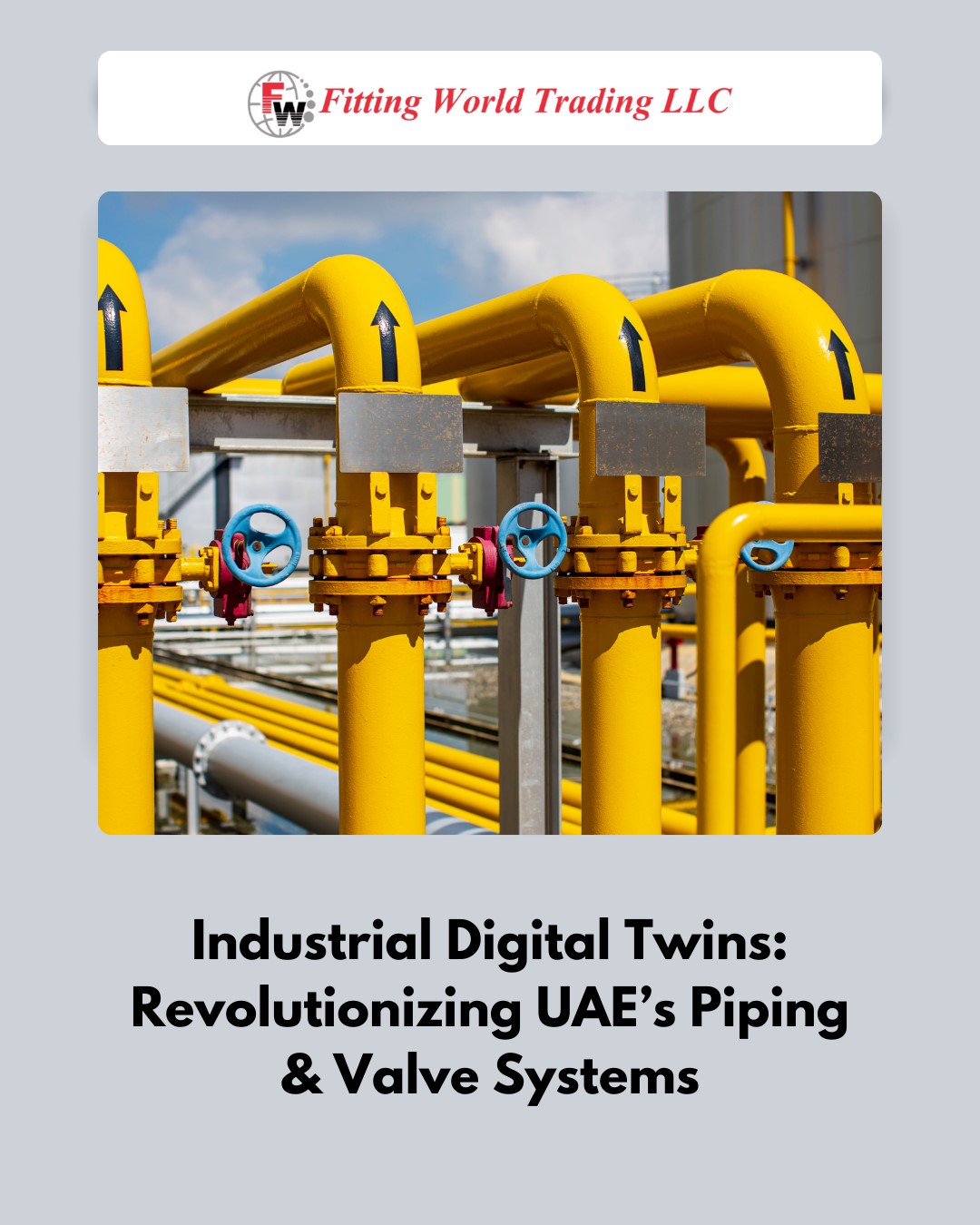
Almost every industrial activity in the UAE, whether oil and gas, power generation, marine, or construction depends on efficient piping networks. Today, these systems are being enhanced by digital twin technology, a virtual replica of physical assets that allows industries to monitor, simulate, and optimize performance in real time.

Just as a buttweld pipe fitting or a storm valve ensures reliability within a physical network, digital twins ensure the overall system performs safely and efficiently under all conditions.

In this article, we will highlight the essential aspects of digital twin technology in piping systems and how they are transforming operations across the UAE.

Why Digital Twins Matter in Industrial Piping

Industrial piping systems are lifelines for critical industries. Digital twins strengthen them by offering:

  • Safety – Identifying leaks, corrosion, and valve failures before they happen.
  • Efficiency – Streamlining fluid and gas transport with predictive adjustments.
  • Durability – Extending the life of components such as flange products.
  • Versatility – Applicable across sectors from petrochemical plants to marine facilities.

For example, gasket pipe fittings in Dubai can be virtually stress-tested to validate sealing performance, while expansion-joints use digital models to predict how joints will react to vibration and heat cycles.

Pipes: The Digital Foundation

Pipes form the core of every system. Digital replicas simulate how materials such as stainless steel and carbon steel react to pressure, temperature, and corrosion. This helps engineers ensure safe operations in offshore rigs, power plants, and manufacturing facilities.

Fittings: Reliable Connections in the Digital World

Fittings like barrel nipple fittings, buttweld pipe fittings, and threadolet fitting in Dubai are essential for system strength. Their digital versions help predict turbulence, pressure drops, and sealing reliability making sure the network operates smoothly.

Valves: Flow Control through Simulation

Valves regulate critical flows across industrial systems. Through digital twins, companies can simulate real-world stress on components such as ss ball valve, and air vent products.

Devices like the Ball Valve and Angle Valve become smart, predictive tools, ensuring that performance is reliable under extreme loads.

Flanges: Strong Joints with Digital Validation

Flanges connect critical sections of pipelines. With digital twins, suppliers can simulate high-pressure operations and verify performance before installation. Products offered by flange suppliers in Dubai combined with spiral wound gasket in Dubai deliver tight, leak-proof connections that are digitally proven for safety.

Expansion Joints: Flexibility Against Stress

Expansion joints absorb vibration and thermal expansion in pipelines. By testing expansion joints virtually, engineers can ensure longer life and stability in demanding environments such as marine and energy plants.

Safety Devices: Protecting Operations

Digital twin models simulate how safety devices respond during emergencies. For example, relief valves such as the Bronze Safety Valve or Bronze Safety Valve with Lever can be digitally tested to verify they release pressure effectively under high-risk scenarios.

How Digital Twins Integrate Components

The strength of digital twin technology lies in combining multiple parts into one monitored system:

  • Pipes provide the flow path.
  • Fittings shape and support the network.
  • Flanges and gaskets seal joints.
  • Expansion joints absorb stress.
  • Valves regulate and secure flow.
  • Devices like the Air Vent Head, Butterfly Valve, Check Valve, double regulating valves, and Duel Plate Check Valve are simulated to validate their long-term performance.

Together, they create a digital ecosystem that mirrors real conditions, allowing industries to make faster and smarter decisions.

Advantages of Digital Twin Technology

Adopting digital twins brings several benefits to UAE industries:

  • Durability – Components like elbow pipe fittings or stainless steel pipe fittings last longer under predictive maintenance.
  • Efficiency – Smooth flow reduces downtime and costs.
  • Safety – Early alerts from equipment like shut off valve in Dubai prevent accidents.
  • Cost-Effectiveness – Lower replacement and repair expenses.
  • Compliance – Meets UAE’s strict industrial and environmental standards.

Conclusion

Digital twin technology is transforming how industrial piping systems operate in the UAE. By creating virtual replicas of pipes, fittings, valves, and joints, businesses can predict failures, improve efficiency, and ensure long-term safety.

From bothwell fittings suppliers in Dubai to ss grease nipple applications, every component benefits from smart monitoring and virtual testing. This innovation makes piping systems stronger, safer, and more sustainable.

With Fitting World Trading LLC’s high-quality products and commitment to innovation, UAE industries can confidently embrace the digital twin revolution and secure their future with smarter infrastructure.
Backbone of Industrial Piping Systems: Key Components You Should Know

Almost every industrial activity, whether petroleum or natural gas, power generation, marine, or construction, has a common factor – an efficient and reliable piping system. Piping networks are usually referred to as the backbone of the industrial value chain as they provide the safe and consistent management of fluids, gases, and chemicals that keep everything functioning.

The success of a piping system does not come from the pipes alone, but from many different engineered parts that assist in connecting, sealing, controlling, and supporting the pipes. For example, a Buttweld Fitting or Marine Valve does not seem significant but they all contribute to the structural integrity, safety, and efficiency of the system.

In this article, we will highlight the essential components of industrial piping systems you must understand and how they contribute to seamless operations, regardless of industry.

Why Industrial Piping Systems Matter

Industrial piping systems are more than just a network of tubes; they are engineered lifelines that keep industries operating smoothly. Their importance lies in:

  • Safety: Preventing leaks, contamination, and system failures.
  • Efficiency: Supporting uninterrupted transport of fluids and gases.
  • Durability: Handling extreme pressure, temperature, and corrosive environments.
  • Versatility: Customizable to suit different industrial applications, from marine to petrochemical.

Understanding the individual components gives professionals an edge when it comes to designing, maintaining, or upgrading these systems.

Pipes: The Foundation of Every Piping System

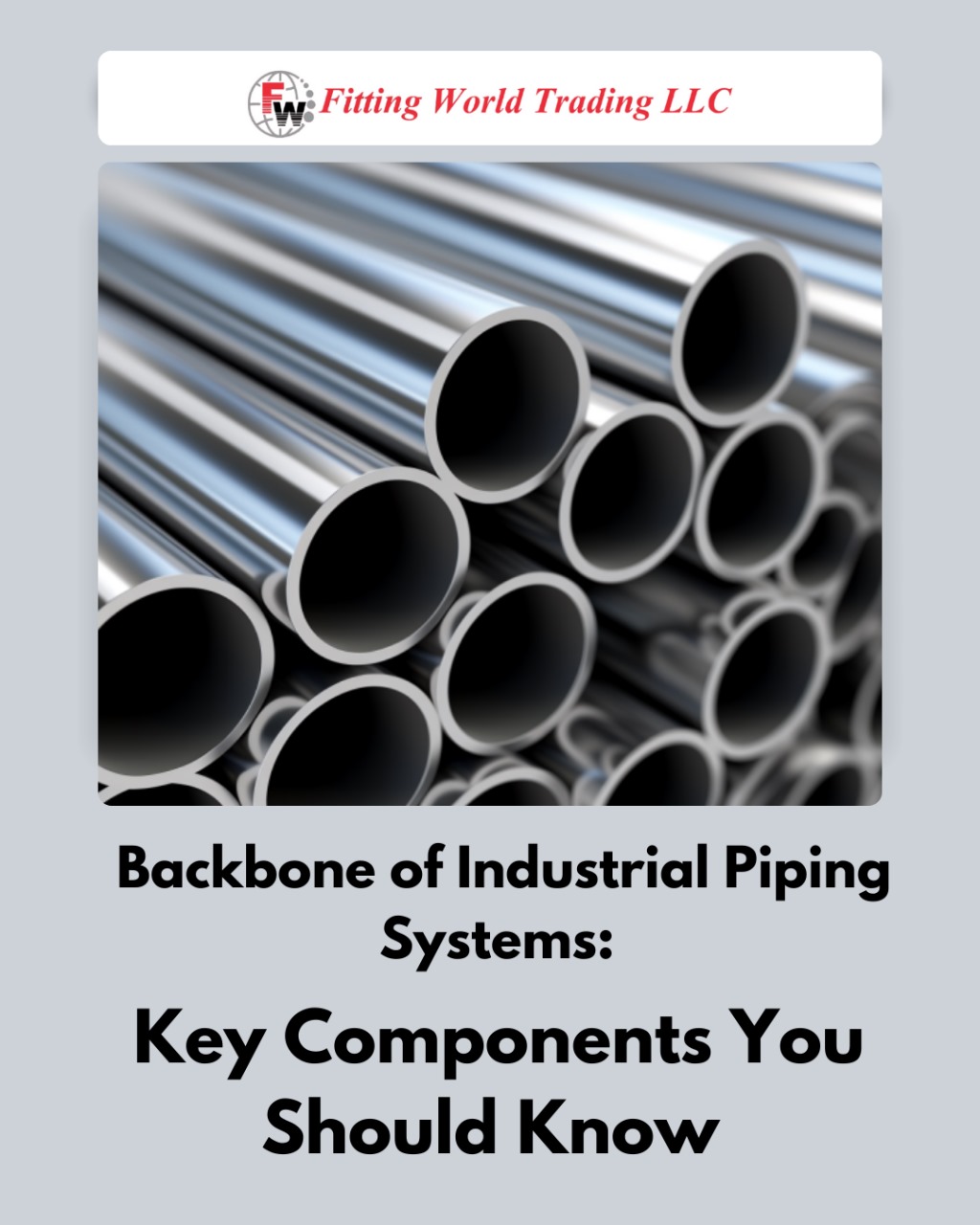
Pipes are at the core of any piping system. They act as the main means of moving liquids, gases, and steam. Pipes can be made from different materials (like carbon steel, stainless steel, and PVC) depending on pressure rating, temperature rating, and corrosion resistance.

Whether offshore rig or food processing plant, the diameter, type of material and strength of pipe, are all chosen to ensure working safely and long term. Pipes of high quality ensure that operations are smooth and form the basis on which all other components are connected to.

Buttweld Fittings: Seamless Connections for Strength

Buttweld Fittings are among the most widely used connectors in industrial piping. Designed to create a smooth flow path, they reduce turbulence and pressure loss while enhancing overall system strength.

These fittings are welded directly onto pipes, which ensures a leak-proof and permanent connection. Available in various shapes like elbows, tees, reducers, and caps, they are ideal for industries that demand durability and precision. Their seamless construction makes them highly reliable for high-pressure and high-temperature applications.

Threaded Fittings: Easy Assembly and Maintenance

Threaded Fittings are a reasonable choice for systems that require flexibility, disassembly, or frequent inspection and maintenance. They are simply screwed together (as opposed to welded) and are perfectly suitable for piping that is small diameter with small pipe pressure.

Threaded fittings are used all the time in plumbing, as well as in chemical processing and in smaller industrial applications where the user benefits from ease of installation and reinstallation, or reuse.

Threaded fittings come in a range of materials, from stainless steel to brass, to suit a variety of different environments.

Flanges: The Strong Joints That Hold It Together

Flanges serve as critical connection points in piping systems, providing strength and flexibility. Bolted together and separated by gaskets, flanges are ideal for disconnections to enable inspection, repairs, or upgrading.

Commonly used types are weld neck, slip-on, blind and socket weld, which were all designed for certain operational conditions. Flanges often operate under high pressure, yet they allow the disassembly of the piping system. They are the ideal connection point in refineries, marine applications, and manufacturing facilities.

Expansion Joints: Flexibility Against Stress

Industrial piping systems generally deal with vibration, thermal expansion, and movement of the piping systems due to machines or situations external to the piping system. Expansion Joints provide a flexible section that absorbs movement caused by the aforementioned situations, while also preventing the piping system from damaging and extending its life expectancy.

Expansion joints can be made of rubber, metal, or composite materials and are made to be flexible so that they can operate dynamically.  Expansion joints are paramount in marine applications and power generation plants facing temperature changes or vibration loads of any kind.

Gaskets: Ensuring Leak-Proof Seals

Even the highest quality flanges and fittings will not work properly if Gaskets are not there to act as the sealing surfaces that will separate two surfaces. Gaskets are installed to fill in the microscopic space to prevent leakage while under high pressure and temperature.

Some examples of gaskets are: in the oil and gas industries, spiral wound gaskets; in water systems, rubber gaskets; the material will be based on the type of fluid, the pressure, and the operating temperature of the fluid. Without gaskets, piping or containment systems would leak or potentially be inefficient or even unsafe.

High Pressure Fittings: Built for Extreme Conditions

High Pressure Fittings are indispensable in industries where pressure is critical and fluids are being transported under very high pressure.

High pressure fittings are designed differently than standard fittings, especially in terms of wall thickness and form to accommodate very high operating conditions.

High pressure fittings play a critical role in systems ranging from petrochemical plants to hydraulic systems and facilities generating power.

By maintaining structurally sound connections in highly pressured systems, high pressure fittings provide system safety and less costly downtime.

Marine Valves: Precision Flow Control

For marine and offshore industries, Marine Valves are essential components that regulate and control the flow of liquids and gases. From ball valves to gate valves, they allow operators to start, stop, or regulate flow within complex piping systems.

Built to resist corrosion from seawater and extreme environments, marine valves are crafted from durable materials like bronze, stainless steel, and special alloys. Their precision and reliability make them indispensable for ensuring safe and efficient marine operations.

How These Components Work Together

What makes industrial piping systems so effective is not just the individual components, but how they integrate:

  • Pipes create the pathways.
  • Fittings (buttweld and threaded) shape and connect the system.
  • Flanges and gaskets create sealed joints.
  • Expansion joints absorb stress and prevent damage.
  • Valves regulate flow.
  • High pressure fittings ensure safety under extreme conditions.

Together, they form a network that is strong, flexible, and efficient enough to withstand demanding industrial requirements.

The Advantages of Using Quality Piping Components

Investing in high-quality piping components delivers significant benefits:

  1. Durability – Long-lasting performance under heavy workloads.
  2. Efficiency – Smooth flow with minimal leakage or downtime.
  3. Safety – Reduced risks of system failure or hazardous leaks.
  4. Cost-Effectiveness – Fewer replacements and repairs over time.
  5. Compliance – Adherence to international standards for industrial safety.

Conclusion

All industrial piping systems require the highest quality and compatibility of all technical components to ensure that the system is efficient and safe to operate.

Understanding the importance of Buttweld Fittings, Threaded Fittings, Flanges, Expansion Joints, Gaskets and High Pressure Fittings enables an industry to assess the right options when designing or upgrading their piping system. All of these components contribute to the performance of the piping system, decrease downtime and ultimately provide cost-savings long term.

A strong piping system is the backbone of any industrial operation. By selecting the right components, that backbone will be strong and permanent to last through any operations. The best Fitting World Trading LLC offers the highest quality products so industries can know that when they purchase from us, they are investing in the best components available for a robust industrial piping solution.

Flanges in Dubai: Trends, Innovations & Uses

Dubai’s rapid growth as a global hub for trade, infrastructure, and industry has created a high demand for durable, reliable, and efficient piping systems. At the heart of these systems lie flanges — the essential components that connect pipes, valves, and equipment in a secure yet serviceable way.

From oil & gas terminals to marine docks and skyscraper HVAC systems, flanges are used to ensure leak-proof performance, easy maintenance, and long-term safety. With evolving technologies and sustainability requirements, the flange industry in Dubai is adapting fast, offering new materials, designs, and smart solutions.

In this article, we’ll explore the trends shaping the flange market in Dubai, the different types available, and their varied applications — along with expert tips for choosing the right flange for your project.

What Are Flanges?

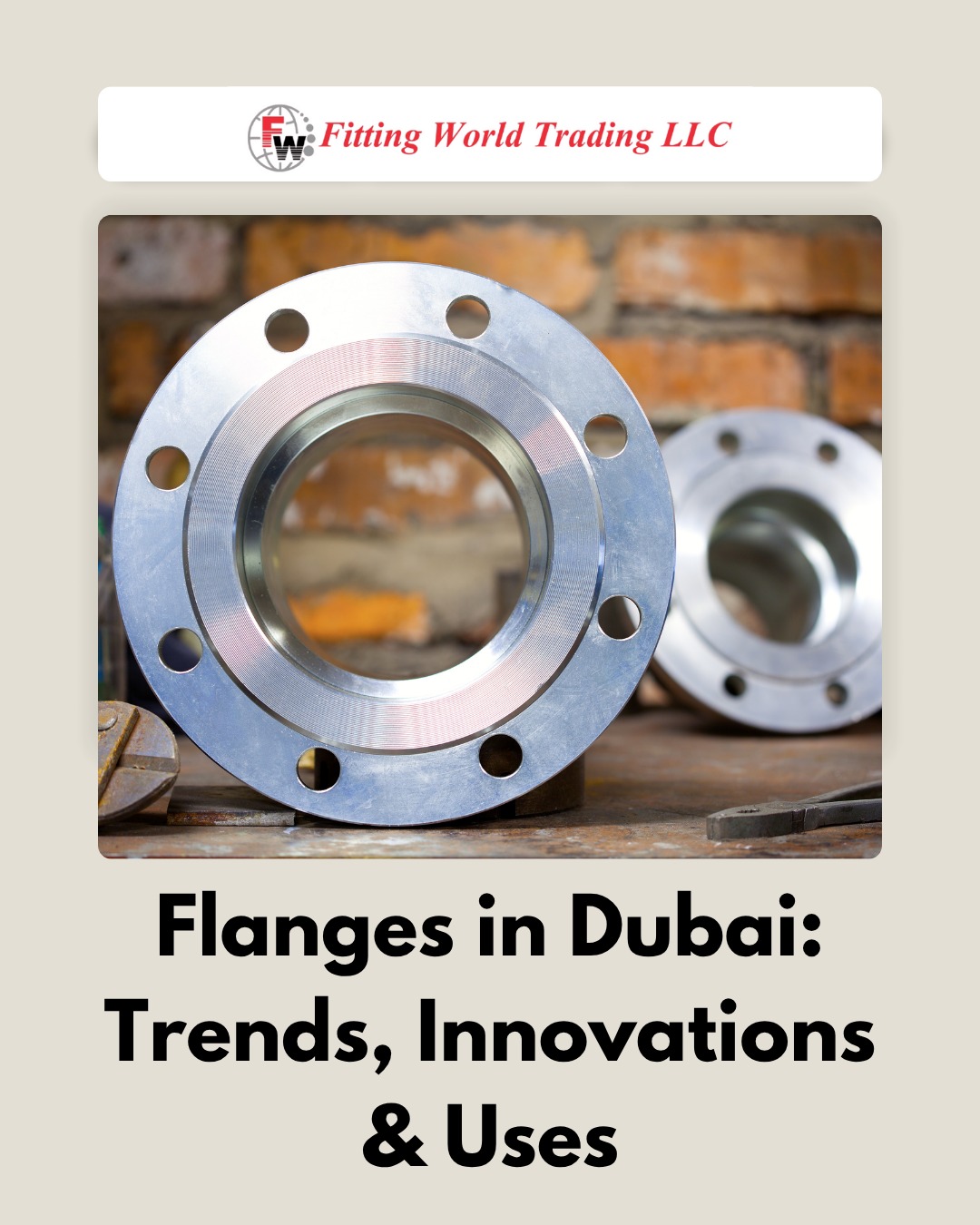
A flange is a mechanical joining method that enables pipes, pumps, and valves to be connected or disconnected without dismantling the entire system. They are usually bolted together with a gasket in between to prevent leaks.

What makes flanges so valuable is their combination of strength and accessibility. Unlike welded connections that are permanent, flanges allow easy inspection, cleaning, and modifications.

In Dubai’s climate — where infrastructure faces high temperatures, humidity, and in coastal areas, saltwater exposure — flanges must be made from high-performance materials such as stainless steel, carbon steel, alloy steel, or corrosion-resistant coatings to ensure durability and safety.

Types of Flanges Used in Dubai

Dubai’s diverse industries require a variety of flange designs to match operating pressures, temperatures, and environmental challenges.

  1. Blind flange – Closes the end of a pipeline or vessel; ideal for future expansions or inspection points.
  2. Lap joint flange – Works with a stub end and offers alignment flexibility; great for systems needing frequent dismantling.
  3. Slip on flange – Easy to install by sliding onto the pipe before welding; suited for low-pressure pipelines.
  4. Socket weld flange – Best for small-diameter, high-pressure lines, offering smooth flow inside the pipe.
  5. Spectacle flange – Consists of two plates, one solid and one with an opening, allowing sections to be isolated for maintenance.
  6. Threaded flange – Screws directly onto the pipe; used when welding is not an option.
  7. Weld neck flange – Features a tapered hub for high-pressure, high-stress applications.

Applications of Flanges

Flanges are used in almost every sector of Dubai’s economy:

  • Oil & GasWeld neck flange and blind flange dominate because they withstand extreme pressures and temperatures.
  • MarineLap joint flange provides quick alignment for systems in ships and offshore platforms.
  • ConstructionThreaded flange and socket weld flange connect HVAC, plumbing, and fire systems in high-rises.
  • Water TreatmentSlip on flange offers cost-effective, quick installations for municipal and industrial plants.
  • PetrochemicalSpectacle flange isolates sections of process lines without full shutdowns.

Trends in Flange Design and Supply in Dubai

1. Advanced Materials for Harsh Environments

Dubai’s climate and industrial requirements demand flanges made from materials like duplex stainless steel, superalloys, and coated carbon steel to resist corrosion, chemical damage, and extreme heat.

2. Precision Machining and Quality Control

CNC machining ensures tighter tolerances, smoother sealing surfaces, and improved leak resistance — essential in high-pressure oil, gas, and chemical applications.

3. Smart Flanges with Monitoring Sensors

Emerging designs now integrate IoT sensors to monitor temperature, vibration, and pressure, enabling predictive maintenance and minimizing downtime.

4. Sustainability and Green Building Alignment

Flange manufacturing is moving towards recyclable materials, low-energy forging, and environmentally responsible coatings in line with Dubai’s sustainability vision.

How to Choose the Right Flange

The wrong flange choice can mean costly repairs or unsafe operating conditions. Here is what to consider:

  1. Pressure & Temperature Rating – For high-pressure, high-heat systems, a weld neck flange or socket weld flange provides maximum strength.
  2. Material Compatibility – Match flange material to the pipeline and transported media to prevent corrosion.
  3. Maintenance NeedsLap joint flange or threaded flange are ideal for systems that require regular inspections.
  4. Budget & Life Cycle Costs – While a slip on flange is economical, a higher-grade material may provide better long-term value in demanding conditions.

Innovations in Flange Technology

  • Coated Flanges – Special epoxy or ceramic coatings extend service life in corrosive marine and chemical settings.
  • Integrated Gasket Systems – Built-in sealing elements reduce assembly time and improve leak prevention.
  • Custom Fabrication – 3D-printed prototypes allow engineers to test designs before full-scale production.

Dubai’s Growing Demand for Flanges

In Dubai, downtime costs are high, and quality standards are strict. Industries like oil & gas, desalination, marine, and construction all depend on dependable flanges to keep systems operational and compliant with both local and international standards.

Working with experienced suppliers ensures that you get products designed for the unique region climate and technical demands — whether that is a blind flange for a petrochemical facility or a lap joint flange for a marine installation.

Conclusion

Flanges are far more than just connectors — they are the foundation of safe, efficient, and maintainable piping systems across Dubai’s industries. From blind flange to weld neck flange, each type has its role in ensuring operational excellence, safety, and flexibility.

As trends move towards advanced materials, smarter monitoring, and eco-friendly manufacturing, Dubai’s flange market is set to keep pace with global innovations while meeting the citys high-performance needs.

For high-quality flanges, industry expertise, and tailored solutions, trust Fitting World Trading LLC — your reliable partner in delivering performance-driven piping components across Dubai and beyond.

Sign Up to Receive Great Offers!