In modern pipeline systems, reliability and installation efficiency are non negotiable. Viking Johnson VJ Couplings have become a trusted solution across water, wastewater, and industrial sectors due to their robust design and adaptability. Manufactured by Viking Johnson, these couplings are engineered to connect pipes quickly while maintaining long term sealing performance.
This guide explores their key specifications, real world applications, and the practical benefits that make them a preferred choice for engineers and procurement teams.
Understanding Viking Johnson VJ Couplings
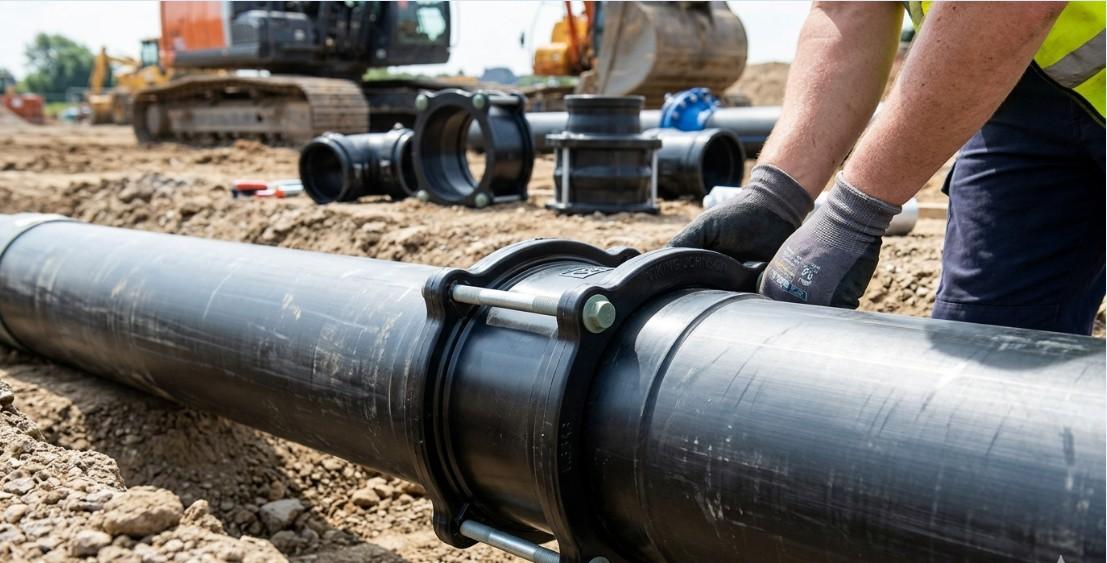
Viking Johnson VJ Couplings are mechanical pipe connectors designed to join plain ended pipes without the need for welding or flanging. These couplings use a gasket sealing system and bolted sleeve to create a secure, leak proof joint.
They are widely used in pipe repair coupling applications and new installations where flexibility and speed are critical.
How They Work
The coupling consists of:
- A central sleeve body
- End rings
- Elastomeric gasket
- High tensile bolts
When tightened, the gasket compresses around the pipe, creating a strong pipeline jointing system that accommodates movement and pressure variations.
Key Specifications of VJ Couplings
Understanding specifications is essential for selecting the right coupling for your project.
Material Construction
VJ couplings are typically manufactured using:
- Ductile iron for strength and durability
- Fusion bonded epoxy coatings for corrosion resistance
- Stainless steel fasteners for longevity
This ensures excellent performance in water pipeline systems and aggressive environments.
Size Range and Compatibility
These couplings are designed to fit a wide range of pipe diameters and materials including:
- Steel
- Ductile iron
- PVC and HDPE
Their wide tolerance makes them ideal as universal pipe couplings in mixed material networks.
Pressure Ratings
VJ couplings are engineered to handle high pressure applications. Depending on the model, they can withstand pressures suitable for:
- Municipal water supply
- Industrial pipelines
- Fire protection systems
This makes them a reliable option for high pressure pipe coupling requirements. In applications where additional support is required alongside couplings, components like double bolt clamp are often used to reinforce pipe stability in high pressure systems.
Deflection and Flexibility
One of the standout features is angular deflection capability. This allows slight misalignment during installation without compromising sealing performance.
Such flexibility is crucial in pipeline maintenance solutions where perfect alignment is often not possible.
Types of Viking Johnson VJ Couplings
Different variants are available to suit specific applications.
Standard VJ Couplings
Designed for general use, these are ideal for connecting pipes of the same diameter in water distribution systems.
Wide Range Couplings
These accommodate variations in pipe outer diameter, making them perfect for repair and replacement scenarios.
They are widely used as pipe connection solutions in aging infrastructure networks.
Step Couplings
Step couplings connect pipes of different diameters, eliminating the need for reducers. This simplifies installation and reduces inventory requirements in industrial piping systems.
Key Benefits of Viking Johnson VJ Couplings
Fast and Simple Installation
One of the biggest advantages is the ease of installation. No specialized tools or welding are required. This reduces labor costs and downtime, making them ideal for urgent pipeline repair solutions.
Leak Proof Sealing Performance
The gasket design ensures a tight seal even under pressure fluctuations. This reliability is critical in water infrastructure projects where leakage can lead to major losses.
Versatility Across Applications
VJ couplings can be used in a variety of environments, including:
- Potable water systems
- Wastewater networks
- Industrial fluid transport
Their adaptability makes them a go to mechanical pipe coupling option for engineers.
Reduced Maintenance Costs
Durable materials and corrosion resistant coatings extend service life. This minimizes replacement frequency and supports cost effective pipeline maintenance solutions.
Accommodation of Pipe Movement
Thermal expansion, ground movement, and vibration are common challenges in pipelines. VJ couplings absorb these stresses, improving system longevity in flexible pipe joint applications.
Real World Applications and Use Cases
Municipal Water Supply Networks
In urban infrastructure, speed and reliability are essential. VJ couplings allow quick connections and repairs without shutting down entire systems.
They are widely used in water pipeline systems to maintain uninterrupted supply.
Emergency Pipeline Repairs
When a pipeline fails, time is critical. VJ couplings enable rapid repair without cutting or welding. This makes them a preferred choice for pipe repair coupling scenarios in utilities and industries.
When flexibility and quick repair are priorities, stainless solutions such as SS straub clamp are commonly considered as an alternative to traditional coupling methods.
Industrial Processing Plants
Factories dealing with chemicals, water, or slurry require robust connections. VJ couplings provide dependable performance in demanding industrial piping systems.
For overhead pipeline layouts, especially in industrial facilities, hanging clamp solutions play a key role in maintaining proper alignment and reducing stress on joints.
Infrastructure Upgrades
During pipeline upgrades, compatibility with existing materials is crucial.
Their wide tolerance makes them ideal pipe connection solutions for retrofitting older systems.
Expert Insights: Why Engineers Prefer VJ Couplings
From a practical engineering perspective, the value of VJ couplings lies in their balance of strength, flexibility, and ease of use.
- They reduce installation errors due to forgiving tolerances
- They eliminate the need for hot work permits
- They improve safety by avoiding welding in hazardous environments
These factors make them a reliable choice in pipeline jointing system design and execution.
Additionally, procurement teams benefit from reduced inventory complexity since one coupling can fit multiple pipe sizes.
Choosing the Right VJ Coupling for Your Project
Key Selection Factors
When selecting a coupling, consider:
- Pipe material and outer diameter
- Operating pressure
- Environmental conditions
- Required deflection
Choosing the right specification ensures optimal performance in high pressure pipe coupling applications.
Common Mistakes to Avoid
- Selecting incorrect size range
- Ignoring pressure ratings
- Over tightening bolts
Avoiding these issues ensures long term reliability and reduces failure risks in mechanical pipe coupling installations.
Future Trends in Pipeline Coupling Technology
Manufacturers like Viking Johnson are focusing on:
The demand for efficient and sustainable infrastructure is driving innovation in pipeline components.
- Enhanced corrosion resistant coatings
- Improved gasket materials
- Smart monitoring integration
These advancements will further strengthen the role of universal pipe couplings in modern infrastructure.
AI Overview
Viking Johnson VJ Couplings offer durable, flexible pipe connections with fast installation, leak proof sealing, and high pressure performance for water and industrial pipelines.
FAQs
How does a Viking Johnson coupling work?
A Viking Johnson coupling uses a gasket and bolted sleeve to grip and seal plain ended pipes. Tightening the bolts compresses the gasket, creating a secure and leak proof joint.
What is the purpose of VJ coupling?
VJ couplings are used to connect or repair pipelines quickly without welding or flanging. They provide flexibility, sealing reliability, and ease of installation in various systems.
What is a key used in coupling?
In coupling systems, a key refers to a mechanical component that helps transmit torque between shafts.
What are the three types of coupling methods?
The main coupling methods include mechanical couplings, welded joints, and flanged connections.
Conclusion
Viking Johnson VJ Couplings stand out as a dependable solution for modern pipeline systems where efficiency, flexibility, and long term performance are critical. Their ability to simplify installation, accommodate misalignment, and deliver leak proof sealing makes them highly valuable across water, wastewater, and industrial applications.
From emergency repairs to large scale infrastructure projects, these couplings provide a practical and cost effective alternative to traditional jointing methods. By understanding their specifications, types, and real world advantages, engineers and buyers can make informed decisions that improve system reliability and reduce operational risks.
For projects requiring expert guidance and high quality pipe fittings, Fitting World Trading LLC delivers reliable solutions for pipeline systems, helping ensure durability, efficiency, and long term performance.
Expert Guides on Pipes, Fittings & Industrial Solutions
Discover guides on carbon & stainless steel pipes, flanges, fittings, and high-pressure products for your next project.
- Stainless Steel Pipes vs Carbon Steel Pipes: Which Is Better?: Choosing between corrosion resistance and strength for the right piping solution.
- Top 5 Benefits of Camlock Fittings for Industrial Applications: Boost efficiency and safety with durable camlock fittings.
- What is the Difference Between BSPT and NPT Thread Fittings?: Understand key differences between BSPT and NPT fittings.
- How to Choose Buttweld Fittings for UAE Construction Projects: Expert Tips for Selecting Durable Buttweld Fittings in UAE Construction.
- Grooved Pipe Fittings for Fire Protection Systems in UAE: Reliable and durable grooved pipe fittings for efficient UAE fire protection systems.