Offcanvas top

Top 10 Essential Electrical Components and How to Choose Them

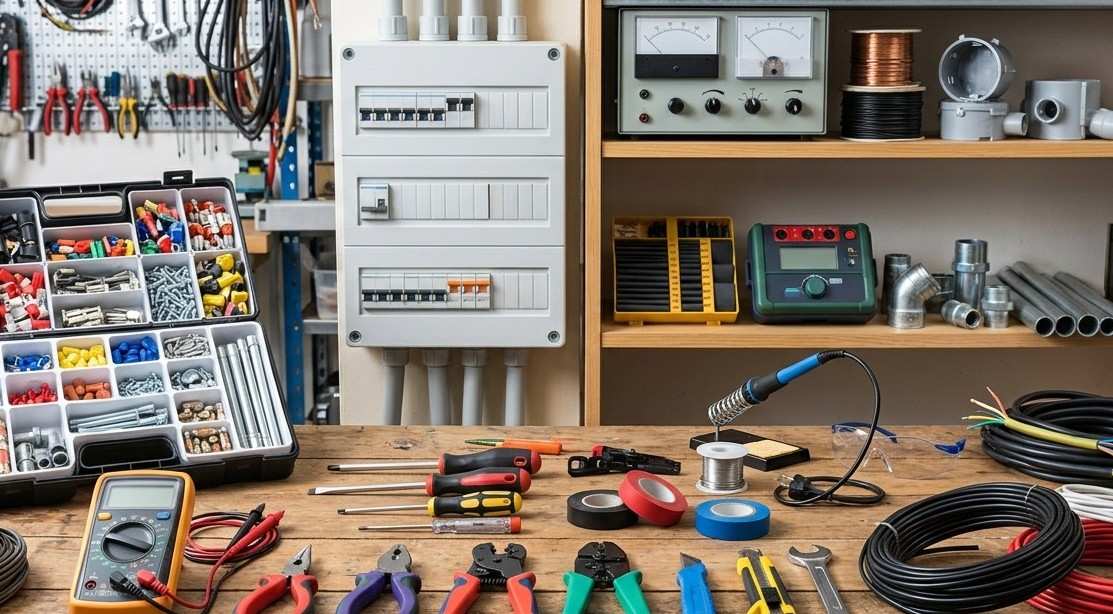
Every electrical installation, whether it is a small residential fit out or a large industrial facility, depends on a handful of core components working together safely. Picking the wrong cable, breaker or fitting does not just cause inconvenience. It can lead to overheating, equipment failure and real safety risks on site.

This guide walks through the ten components every buyer, contractor and facility manager should understand, along with practical tips for choosing the right one for your project.

What Are Electrical Components

Electrical components are the physical parts that make up a circuit or an electrical system. They control how current flows, how power is distributed and how a system stays protected under normal and fault conditions. Understanding what each part does makes it far easier to specify the right product instead of guessing based on price alone.

The 10 Essential Electrical Components

Every safe and efficient electrical system relies on these essential components, each serving a specific role in power distribution, protection, control and connectivity.

1. Cables and Wires

Cables carry power from source to load, so the conductor size, insulation type and installation environment all matter. Copper conductors are common for general wiring because of their conductivity, while armoured cable suits underground or outdoor runs where extra mechanical protection is needed.

2. Switches

Switches control when a circuit is open or closed. Options range from simple one way switches for a single light to two way and intermediate switches for staircases and long corridors. Smart switches are becoming popular for remote or scheduled control in modern buildings.

3. Sockets and Outlets

Sockets need to match the current draw of connected devices and the environment they sit in. Kitchens, bathrooms and outdoor areas usually call for splash proof or weather protected sockets, while standard indoor sockets should still meet recognised safety standards.

4. Circuit Breakers

Circuit breakers protect a system from overloads and short circuits by cutting power automatically. Miniature circuit breakers work well for most standard loads, while units with added earth leakage protection are used where extra safety is required, such as in wet areas or industrial panels.

5. Fuses

Fuses remain a simple and low cost way to protect a circuit. The rating has to be matched carefully to the appliance or circuit it protects. A rating that is too high offers little protection, and one that is too low leads to constant nuisance replacements.

6. Light Fixtures and Luminaires

Beyond appearance, a light fixture needs to match its lamp type, wattage and installation location. Outdoor fittings require a suitable IP rating to resist dust and moisture, and LED options are generally preferred for their lower running cost and longer lifespan.

7. Junction Boxes

Junction boxes protect wire connections from dust, moisture and accidental contact. The box needs enough internal space for the number of wires it holds, and materials should suit the setting, with metal boxes often preferred in industrial areas that need added fire resistance.

8. Conduits

Conduits shield cables that run along walls, ceilings or underground. Plastic conduit is light and easy to install for most domestic work, while metal conduit gives stronger protection in commercial or industrial settings where impact resistance matters more.

9. Relays and Contactors

Relays and contactors are used to switch higher loads or automate control circuits. Matching the coil voltage and the rated current of the device being controlled is essential, and DIN rail mounted relays are a practical choice for control panels.

10. Timers and Sensors

Timers and sensors add automation to lighting, ventilation and other equipment. PIR sensors are widely used for security lighting since they respond to movement, while time switches help cut wasted electricity by turning devices off after a set period.

Component Comparison at a Glance

Component Main Function Key Buying Factor
Cables and Wires Carry current from source to load Conductor size and insulation type
Switches Open or close a circuit Load rating and switching type
Sockets and Outlets Connect devices to the supply Current rating and IP protection
Circuit Breakers Protect against overload and short circuit Rated capacity and trip type
Fuses Protect circuits from excess current Correct rating for the load
Light Fixtures Provide illumination Lamp compatibility and IP rating
Junction Boxes House and protect wire connections Size, material and IP rating
Conduits Physically protect cables Material and installation environment
Relays and Contactors Switch or automate higher loads Coil voltage and current rating
Timers and Sensors Automate control of devices Adjustability and load compatibility

Panels and enclosures that combine several of these parts often sit alongside other industrial materials on the same site, and the same care given to choosing stainless steel pipe fittings for industrial projects should apply when specifying enclosures exposed to moisture or chemicals.

How to Choose the Right Electrical Components

Choosing correctly comes down to asking a few practical questions before placing an order.

  • What is the application, whether domestic, commercial or industrial, and is it indoor or outdoor
  • What voltage and current will the component actually need to handle
  • Does the location call for a specific safety or compliance rating, such as splash proof gear for a bathroom or kitchen
  • Is the supplier able to provide certified products backed by proper technical support
  • What is the realistic budget once installation and long term reliability are factored in

The table below breaks these factors down further for quick reference during procurement.

Buying Factors by Project Type

Project Type Priority Factors Typical Components Needed
Residential Safety, aesthetics, ease of use Switches, sockets, light fixtures, MCBs
Commercial Load capacity, compliance, durability Circuit breakers, conduits, relays, sensors
Industrial Heavy duty rating, fire resistance, automation Contactors, junction boxes, armoured cable, timers

Getting the specification right at this stage saves time later, particularly on larger projects where a mismatched component can hold up an entire installation. Many of the same principles used when selecting buttweld fittings for UAE construction projects apply here too, since material quality and compliance with recognised standards always come first.

Common Mistakes to Avoid

  • Choosing a component based on price alone without checking its rating
  • Ignoring the installation environment, especially moisture, dust or vibration
  • Mixing incompatible voltage or current ratings between connected components
  • Skipping proper documentation or data sheets before purchase

If a project also involves sealing or piping alongside the electrical scope, it is worth understanding what a spiral wound gasket is and where it is used, as many industrial sites procure electrical and piping components together from the same trusted supplier.

Final Buying Checklist

Before finalising an order, confirm the voltage and current rating, check the IP rating against the installation environment, verify compliance with local safety standards and make sure the supplier can provide technical guidance if questions come up during installation.

Explore our full range of electrical products supplier in Dubai to find certified components suited to residential, commercial and industrial projects.

Conclusion

Choosing the right electrical components is not about picking the cheapest option on the shelf. It is about matching each part to its load, its environment and the safety standard the project demands, so the system runs reliably for years rather than months.

For certified electrical products and expert guidance across the UAE, FW Trading LLC stocks a complete range built for residential, commercial and industrial use.

Ready to get started? Reach out to our team today for technical advice or a fast quote.

Expert Guides on Industrial Insights

If you want to deepen your understanding of industrial equipment, material handling, and engineering best practices, explore these related articles.


Understanding the Difference Between Lifting and Rigging

Anyone working around cranes, hoists or heavy loads has heard lifting and rigging used almost like they mean the same thing. On a busy site they get mixed up all the time, and treating them as one process is where a lot of safety gaps start.

Lifting and rigging are two separate stages of the same job. One prepares the load. The other moves it. Knowing where one ends and the other begins helps supervisors plan safer lifts, helps buyers pick the right gear and helps new workers understand what is happening around them.

What Lifting Actually Means?

Lifting is the physical act of raising, lowering or shifting a load using mechanical force. It is the part of the operation where a crane, hoist or forklift does the heavy work.

A few things define lifting on a job site.

  • It always uses powered or mechanical equipment such as cranes, hoists, jacks or forklifts
  • Every piece of lifting equipment has a rated load capacity that operators must respect
  • Operators need proper training to judge balance, angle and load behaviour during the move
  • Lifting plans usually include load testing and routine equipment checks before use

In short, lifting is the action. It cannot happen safely on its own though, because a load has to be properly attached and balanced first, and that is where rigging comes in.

What Rigging Actually Means?

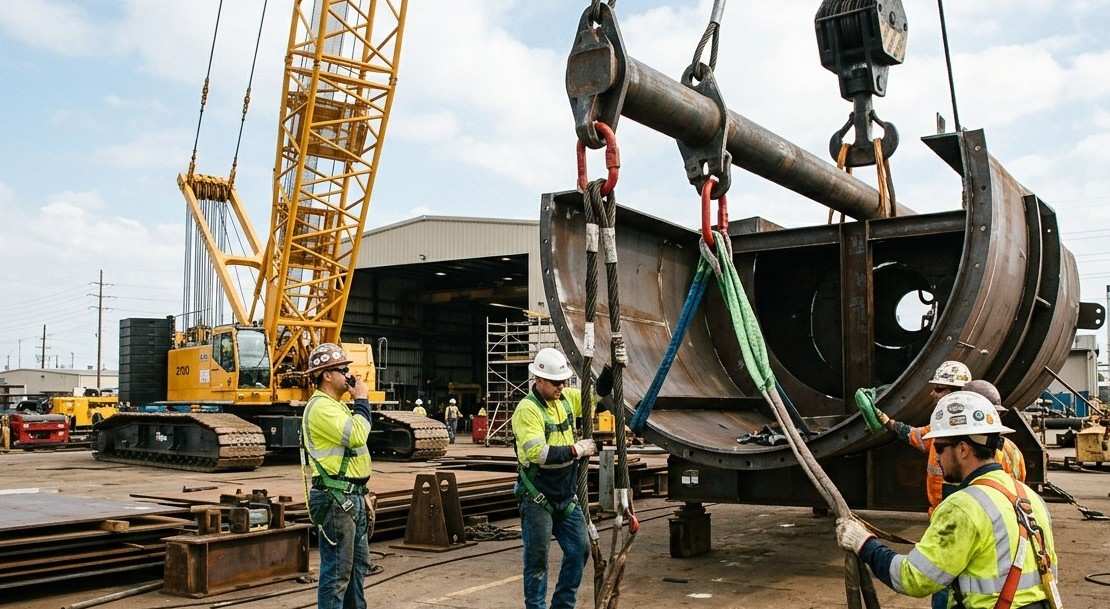
Rigging is the preparation stage. It covers everything needed to attach a load securely to lifting equipment so it can travel without shifting, swinging or slipping.

A rigger looks at the shape, weight and centre of gravity of the load, then chooses the right combination of hardware to secure it. This includes slings, shackles, wire rope, chains, hooks and spreader bars.

Good rigging practice usually involves the following steps.

  • Assessing the load for weight, shape and balance point
  • Selecting hardware rated for that specific load
  • Distributing weight evenly across attachment points
  • Following a written rigging plan for complex or heavy lifts
  • Inspecting slings and hardware for wear before every use

Rigging is what keeps a load stable once the crane starts moving it. Without correct rigging, even the strongest crane cannot guarantee a safe lift.

Lifting and Rigging Side by Side

The table below breaks down how the two processes differ in practice.

Aspect Lifting Rigging
Main Role Moves the load using mechanical force Secures and balances the load before it moves
Typical Equipment Cranes, hoists, forklifts, jacks Slings, shackles, chains, hooks, spreader bars
Focus Area Load capacity and safe operation of machinery Load distribution and stable attachment
Skill Required Trained crane or hoist operators Trained riggers who understand load geometry
Timing in the Process Happens after rigging is complete Happens before lifting begins

Common Equipment Used in Each Process

Sites rarely use one without the other, and most equipment falls clearly into one category.

Lifting equipment generally includes cranes, overhead hoists, forklifts and mobile elevated platforms, providing the raw force needed to move a load vertically or horizontally.

Rigging hardware includes wire rope slings, synthetic web slings, chain slings, shackles, eyebolts, turnbuckles and load binders, connecting the load to the lifting equipment and keeping it stable throughout the move.

For teams sourcing both categories from one place, a dedicated Lifting and Rigging Equipment Supplier makes it easier to match compatible hardware to your machinery instead of guessing at ratings from different brands.

Why the Two Have to Work Together

A crane rated for ten tonnes is useless if the sling attached to the load is rated for two. Likewise, perfectly rigged cargo will not move anywhere without the right lifting machine behind it.

Every successful lift depends on this handoff. The rigger prepares the load and confirms it is balanced and secured. The lifting equipment then does the actual raising, lowering or transporting. If either step is weak, the whole operation is at risk, regardless of how strong the other side is.

This is why supervisors check both sides of a lift plan, not just the crane specifications. Load weight, sling angle, attachment points and equipment capacity all have to line up before anyone gives the signal to lift.

Where Lifting and Rigging Matter Most?

These two processes show up constantly across heavy industry.

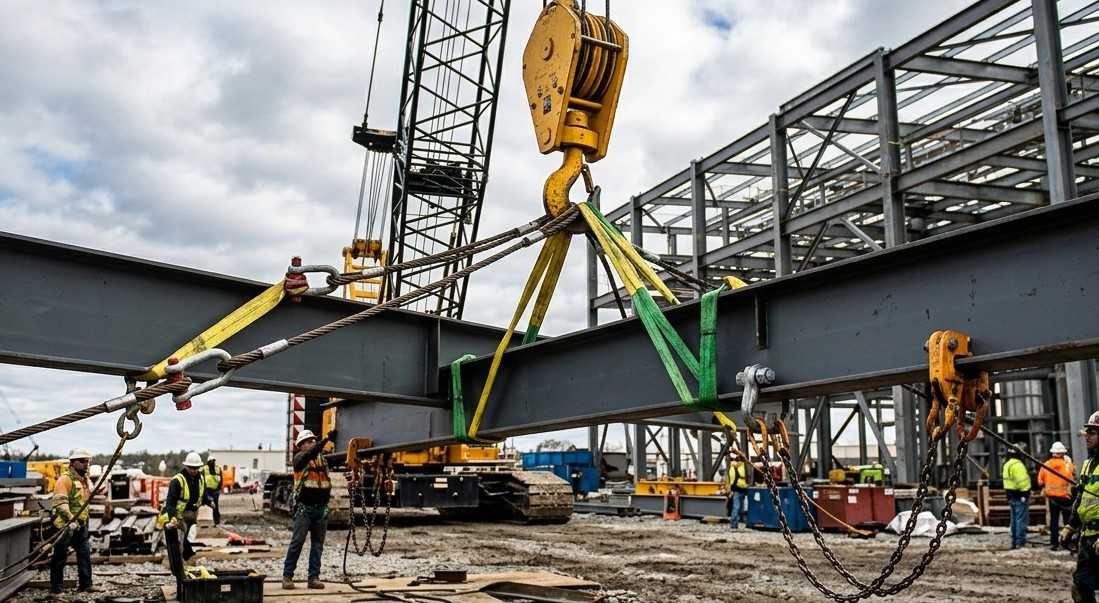
  • Construction sites rely on rigging to secure steel beams and precast panels before cranes lift them into place
  • Manufacturing plants use both for loading and unloading raw materials and finished goods
  • Ports and shipping yards depend on rigging to secure containers before ship cranes move them
  • Oil and gas operations use rigging extensively when transporting equipment to offshore or remote locations
  • Marine operations lean on both when loading heavy components onto vessels, an area closely tied to the systems covered in our article on storm valves in marine industries

In every case, the sequence stays the same. Secure first, then lift.

Choosing the Right Equipment for Your Site

Picking equipment for either process comes down to a few practical checks.

Start with the load itself. Know its weight and centre of gravity, then match rigging hardware to the lifting equipment’s rated capacity, never the other way around.

Certification matters too, since equipment that meets recognised standards gives you a paper trail for audits and a real safety margin on site, a principle we also cover in our post on safety valve insights for UAE industrial processes.

For a full walkthrough of the selection process from load assessment to final positioning, our Ultimate Guide to Lifting and Rigging Equipment breaks it down step by step.

Conclusion

Lifting and rigging are not competing terms. They are two connected halves of the same operation, and understanding where one stops and the other starts makes every lift more predictable and every crew safer on site.

For certified lifting and rigging equipment and expert guidance across the UAE and GCC, FW Trading LLC stocks a complete range built for demanding industrial use.

Ready to get started? Reach out to our team today for technical advice or a fast quote.

Expert Guides on Industrial Insights

If you want to deepen your understanding of industrial equipment, material handling, and engineering best practices, explore these related articles.

The Ultimate Guide to Lifting and Rigging Equipment

Lifting and rigging equipment forms the backbone of safe material handling across construction, oil and gas, marine and manufacturing sites in the UAE and GCC. From slings and hoists to shackles and hooks, every part plays a role in moving heavy loads without risk.

This guide walks through the main equipment types, how to choose the right gear and how to keep it working safely for years.

What Is Rigging and Why It Matters

Rigging means connecting a load to a crane, hoist or winch using the right combination of hardware. It sounds simple, but choosing the wrong sling, shackle or hook is one of the biggest causes of dropped loads and workplace injuries.

When you understand how each part works together, and you buy from a trusted Lifting & Rigging Equipment Supplier, you can plan every lift so it stays smooth, controlled and safe from start to finish.

Types of Lifting Slings

A sling is the direct link between your load and the lifting device. Picking the right one keeps both the load and the people around it safe.

Webbing Slings

Webbing slings are woven from polyester. They are light in weight and gentle on delicate or painted surfaces.

Round Slings

Round slings have a protected polyester core inside a woven cover. They spread the load evenly, which makes them useful for curved or oddly shaped items.

Chain Slings

Chain slings are made from alloy steel. They handle heavy loads, high heat and rough, abrasive conditions well.

Wire Rope Slings

Wire rope slings combine strength with flexibility. They work well on construction sites and in marine settings.

Rigging Hardware and Connectors

Rigging hardware connects the sling to the crane hook and keeps the whole lifting system stable while the load is in the air.

  • Shackles connect slings, wire ropes and hooks together, and bow shackles handle angled loads better than dee shackles
  • Hooks should always include a safety latch to stop the load from slipping free during a lift
  • Eye bolts and swivel hoist rings create a fixed lifting point directly on the load itself
  • Turnbuckles let you fine tune tension and length when a lift uses more than one point

Always check that hardware carries a clearly stamped working load limit. Choosing certified shackles and connectors makes it much easier to match every part to your load and your working environment.

Comparing Common Sling Types

Use the table below to quickly compare sling types and match one to your job.

Sling Type Best Suited For Key Advantage
Webbing Sling Light to medium loads, finished surfaces Lightweight and gentle on materials
Round Sling Curved or irregular loads Even load distribution
Chain Sling Heavy duty, high heat environments High strength and heat resistance
Wire Rope Sling Construction, mining, marine work Strong and abrasion resistant

Hoists Used in Lifting Operations

A hoist supplies the mechanical power to raise and lower loads again and again, safely.

  • Manual chain hoists work well where power is limited and lifting only happens now and then
  • Lever hoists offer a portable option for pulling or positioning loads at an angle
  • Electric hoists suit sites with frequent lifting, offering speed and precise control
  • Winches help with horizontal pulling tasks alongside vertical lifting gear

How to Choose the Right Lifting and Rigging Equipment

Picking the right gear for a lift is a step by step decision, not a guess. Each factor below affects safety directly.

  • Confirm the exact load weight, shape and centre of gravity before selecting any component
  • Choose a working load limit that sits well above the total load, since sudden movement adds extra force
  • Watch the sling angle, since a narrow angle adds a lot of extra tension to each leg of the sling
  • Match the equipment material to the environment, using stainless steel near the coast and heat rated chain in foundries
  • Make sure every part in the load path has a similar rated capacity, so the whole system stays balanced and predictable

If you are also sourcing connectors for fluid handling, our complete guide to camlock fittings covers that in more detail.

Inspection and Maintenance Best Practices

Even the best rigging equipment can fail if it is not checked and cared for regularly.

  • Inspect slings and hardware visually before every single lift
  • Look closely for cuts, kinks, corrosion, bent pins and worn stitching
  • Store equipment in a clean, dry area away from chemicals and direct sunlight
  • Lubricate chains and wire rope as recommended to prevent rust and stiffness
  • Keep a written inspection log noting dates, findings and any repairs made

Keeping a close eye on component condition matters just as much with lifting gear as it does with other critical industrial parts, an idea we also cover in our guide on safety valve insights for UAE industrial processes.

Common Mistakes to Avoid

  • Using unmarked or uncertified equipment to save on cost
  • Ignoring visible wear because the gear worked fine last time
  • Overloading a sling or shackle to meet a tight deadline
  • Pulling a load at a sharp angle that the hardware was not designed for
  • Skipping routine inspection during busy periods

Check Out the Best Lifting and Rigging Products

Once you know what your lift requires, having the right parts on hand makes the job much easier.

Conclusion

Reliable lifting and rigging equipment protects your workers, your load and your schedule, all at the same time. Choosing the right sling, hardware and hoist for each job, and inspecting it regularly, keeps every lift under control.

For certified rigging equipment and expert guidance across the UAE and GCC, FW Trading LLC stocks a complete range built for demanding industrial use. Ready to get started? Contact us today for technical advice or a fast quote.

Expert Guides on Industrial Insights

If you want to deepen your understanding of industrial fittings, piping systems, and engineering best practices, explore these related articles:

Complete Guide to Camlock Fittings Types Uses and Material Selection

Camlock fittings are among the most trusted quick connect couplings used across industrial fluid transfer systems. Known as cam and groove couplings, they allow operators to join hoses and pipes in seconds without tools or clamps.

From oilfield operations to food processing lines, these fittings deliver a fast, leak free connection that keeps operations moving. This guide breaks down the types, materials, sizes and everything you need to know before you buy.

What Are Camlock Fittings?

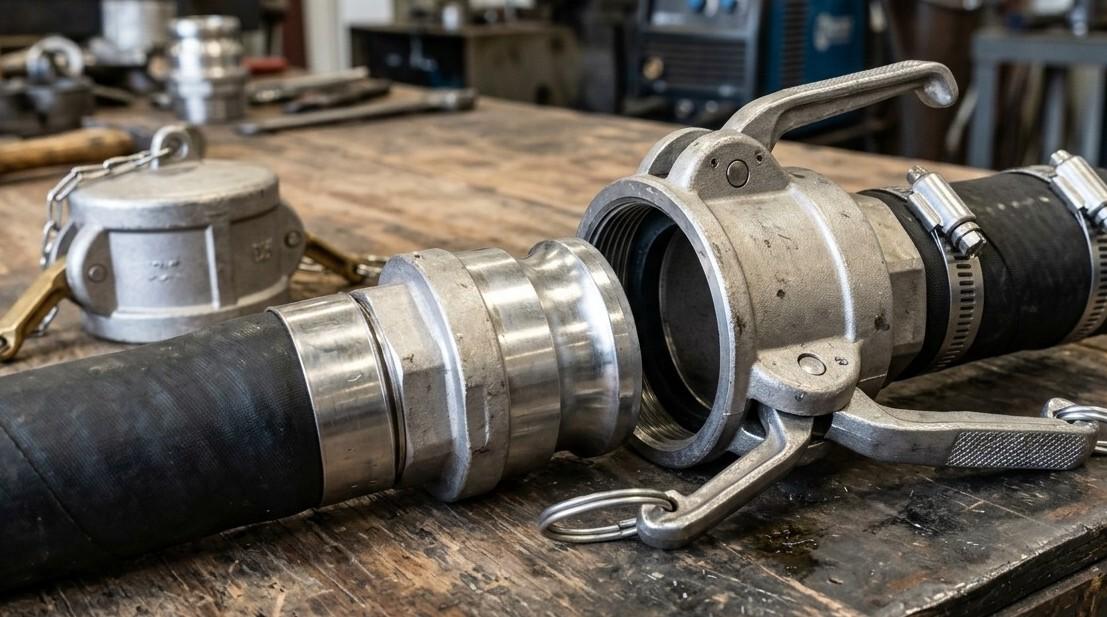
A camlock fitting is a two piece connector made up of a male adapter and a female coupler. The female end has hinged cam arms that lock securely over the groove on the male adapter.

Folding the arms down creates a tight seal in one simple motion. There is no threading, no bolting and no need for specialized tools, which is why these couplings are so popular where hoses are connected and disconnected many times a day.

How Camlock Couplings Work?

The operating principle is straightforward. The male adapter is inserted into the female coupler, and the operator folds the cam arms down into the closed position.

This locks the two halves together and compresses the internal gasket to form a leak proof seal. To disconnect, the arms are lifted and the adapter pulls free, needing only hand pressure and no tools. This same simplicity is why our article on why camlock fittings are ideal for industrial use ranks them ahead of threaded connections for high frequency hose changes.

Types of Camlock Fittings Explained

Camlock couplings are identified by a standardized letter system, from Type A through Type F, along with dust caps and plugs for protection during storage.

Type Configuration Common Use
Type A Male adapter with female thread Connecting to threaded pipe outlets
Type B Female coupler with male thread Connecting to threaded pipe inlets
Type C Female coupler with hose tail Attaching to flexible hose ends
Type D Female coupler with female thread Threaded pipe to pipe connections
Type E Male adapter with hose tail Attaching to flexible hose ends
Type F Male adapter with male thread Threaded to threaded connections
DC and DP Dust cap and dust plug Protecting open ends during storage

Matching the correct type to your hose or pipe end is the first step toward a safe connection. Using the wrong configuration is one of the most common causes of leaks in fluid transfer systems.

Choosing the Right Camlock Material

Material selection has a direct impact on how well a camlock fitting performs against pressure, temperature and the fluid being transferred.

  • Aluminium camlock fittings are lightweight and cost effective, making them a strong choice for water, fuel and general purpose transfer
  • Stainless steel camlock fittings offer excellent corrosion resistance and suit chemical, marine and food grade applications
  • Brass camlock fittings handle petroleum products and mild chemicals well and are common in fuel systems
  • Polypropylene camlock fittings resist aggressive chemicals and are a lighter, budget friendly option for agriculture and water transfer

The gasket material also needs attention. EPDM suits water and mild chemicals, Buna N suits oils and fuels, and Viton is the preferred choice for high temperature or aggressive chemical service.

Camlock Size and Pressure Rating Guide

Camlock fittings typically range from half an inch up to six inches. The size chosen should always match the internal diameter of the connected hose or pipe.

Most camlock couplings carry a standard operating pressure rating. Confirm that the fitting you select comfortably exceeds your system’s maximum working pressure and temperature, since undersized or mismatched fittings are a leading cause of pressure loss and premature wear.

Threaded camlock ends also need to match your existing pipework, and NPT and BSP threads are not interchangeable. If you are unsure which standard your system uses, our guide on the difference between BSPT and NPT thread fittings shows how to tell them apart before you order.

Industries That Depend on Camlock Fittings

Camlock couplings are used wherever fluids need to move quickly and safely between hoses, tanks and pipelines.

  • Oil and gas operations rely on camlocks for fluid transfer, tank loading and mud circulation
  • Chemical processing plants use them for tanker loading and temporary maintenance connections
  • Food and beverage facilities depend on stainless steel camlocks for sanitary ingredient transfer
  • Agricultural operations use them for irrigation, spraying and general water handling
  • Construction sites use camlocks for dewatering and dust suppression

Maintenance Tips for Long Service Life

Routine care extends the working life of any camlock coupling and prevents unplanned downtime.

  • Inspect cam arms, gaskets and sealing surfaces regularly for wear or damage
  • Depressurize the system fully before disconnecting any fitting
  • Replace gaskets as soon as cracking or deformation appears
  • Store unused fittings with dust caps or plugs to keep debris out
  • Apply food grade lubricant to cam hinges where recommended to keep movement smooth

Poor installation is behind many of these failures before wear even becomes a factor. Our guide on common installation mistakes that damage industrial fittings covers the errors most likely to shorten a camlock coupling’s service life.

Why Work With an Experienced Camlock Fittings Supplier

Sourcing couplings from a knowledgeable camlock fittings supplier makes selection far easier, especially when a project involves multiple materials, sizes and pressure requirements.

An experienced supplier can confirm chemical compatibility, recommend the right gasket and ensure every fitting meets recognized industrial standards before it reaches your site. This saves time and reduces the risk of costly leaks later.

Conclusion

Camlock fittings remain one of the fastest and most dependable ways to connect and disconnect hoses across oil and gas, chemical, food and agricultural operations. Getting the type, material, size and pressure rating right from the start keeps a fluid transfer system safe and efficient for years to come.

For certified, high quality camlock fittings and piping components across the UAE and GCC, FW Trading LLC supplies a comprehensive inventory tailored to your project’s pressure and material needs. Ready to get started? Contact us today for technical guidance or a quick quote.

Expert Guides on Industrial Insights

If you want to deepen your understanding of industrial fittings, piping systems, and engineering best practices, explore these related articles:

Sign Up to Receive Great Offers!