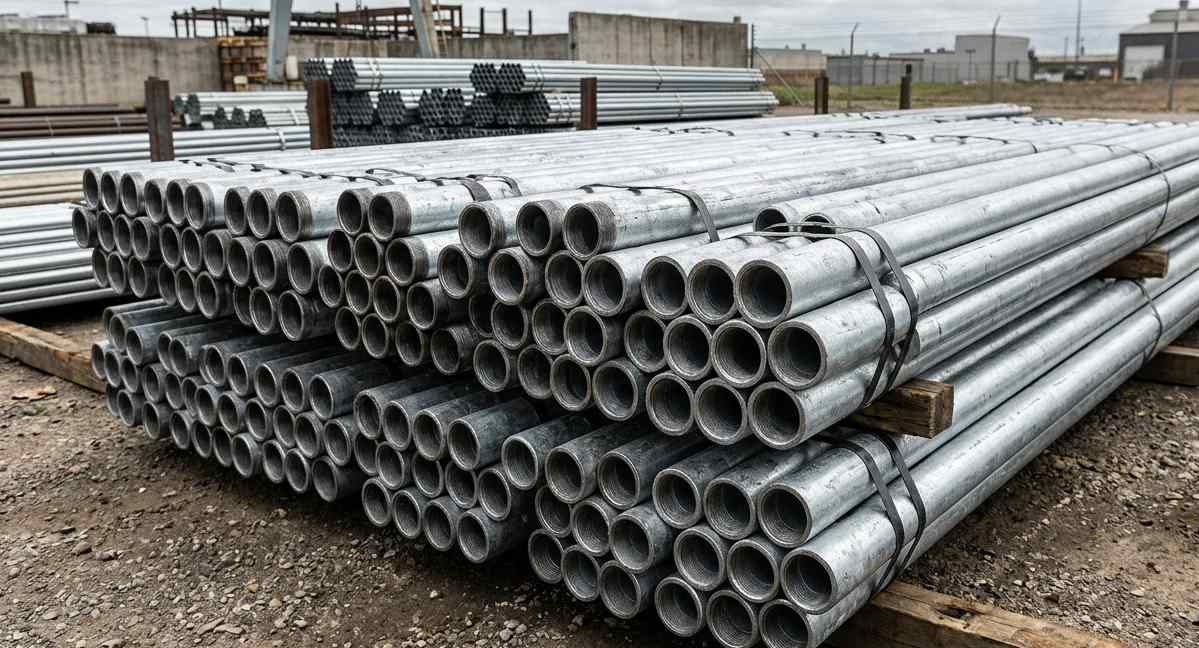
Select GI pipe suppliers in UAE by verifying seven points: standards compliance, zinc coating thickness, mill test certificates, size and schedule range, stock availability, traceability, and after-sales support. A supplier that passes all seven reduces corrosion risk, delays, and rework.
Galvanized iron (GI) pipe looks identical across suppliers, but performance does not. Coating quality, wall thickness, and documentation vary widely.
The seven checks below give procurement teams and project engineers a repeatable way to compare suppliers in UAE before issuing a purchase order.
Why Does Supplier Selection Matter for GI Pipe Projects?
Supplier selection determines how long galvanized pipe lasts. A weak zinc layer or uneven wall thickness causes early rust, leaks, and failed inspections. In the UAE’s humid, salty coastal climate, these defects surface within months.
Consider a chilled water line through a basement plant room. Condensation attacks thin coatings quickly, and one failed section can force shutdowns and re-testing across the entire loop.
Teams often compare quotes on price per meter alone. That hides the real cost: rework, delayed handover, and consultant rejections outweigh a modest price difference.
What Are the 7 Checks Before Selecting GI Pipe Suppliers in UAE?
Check the supplier’s standards compliance, zinc coating, test certificates, size range, stock depth, traceability, and support. Each check answers one risk: product quality, documentation, or delivery reliability. Together they separate dependable GI pipe suppliers in UAE from traders who only resell on price.
Checks 1 to 3: Product Quality and Compliance
- Standards compliance. Confirm the pipe meets a recognized standard such as ASTM A53, BS EN 10255, or BS 1387, and matches your specification and consultant approvals. Get the standard written on the quotation.
- Zinc coating thickness. Hot-dip galvanizing should meet the coating mass required by the applicable standard. Ask for coating test results and compare them against ISO 1461 principles for hot-dip zinc coatings, as explained by the American Galvanizers Association.
- Mill test certificates. Every batch should ship with a certificate showing chemical composition, mechanical properties, and hydrostatic test results. Verify that its heat numbers match the pipe markings.
Checks 4 to 7: Supply and Service Reliability
- Size and schedule range. A strong supplier stocks multiple diameters, wall thicknesses, and threaded and plain-end options. A narrow range forces split orders across vendors.
- Stock availability. Ask for current stock levels and lead times for your quantities. Projects stall when a supplier must import. Local warehouse stock in Dubai, Sharjah, or Abu Dhabi shortens that gap.
- Traceability. Confirm the supplier can trace pipe to the mill and production lot, which matters during consultant audits and defect claims.
- After-sales support. Look for technical guidance, fitting compatibility advice, and a clear process for rejected material.
Should You Buy Pipes and Fittings from One Supplier?
Buying from one source simplifies quality control. Pipes and fittings suppliers in UAE that stock both can match threads, pressure ratings, and coatings across the system, reducing the risk of incompatible components.
Mixed sourcing causes subtle problems. Fittings from another manufacturer may carry thinner galvanizing than the pipe, so corrosion starts at the joints, already the most vulnerable points.
When you evaluate pipe fittings suppliers in UAE, apply the same seven checks. Request fitting certificates, confirm the standard, and inspect threads for clean cutting.
What Red Flags Should Buyers Watch For?
Red flags include missing certificates, vague origin claims, unusually low pricing, and unwillingness to allow sample inspection. Any one of these suggests weak controls. Two or more should remove the supplier from your shortlist.
Watch for these specific warning signs:
- Certificates that carry no heat numbers or are photocopies of generic documents
- Pipe markings that do not match the quoted standard
- Coating that appears uneven, flaky, or patchy on visual inspection
- Refusal to share previous project references
- Delivery promises with no written lead time
Request a small sample before committing to bulk volumes. Measure wall thickness with a caliper and inspect the coating surface under good light.
How Do You Compare GI Pipe Suppliers Objectively?
Use a weighted scorecard. Assign each of the seven checks a score from 1 to 5, then multiply by a weight that reflects your project risk. Totals make supplier comparison transparent and defensible to stakeholders.
A practical weighting for building services projects:
- Standards compliance: 20%
- Zinc coating: 20%
- Mill test certificates: 15%
- Stock availability: 15%
- Traceability: 10%
- Size range: 10%
- After-sales support: 10%
Adjust the weights for your context. A fast-track fit-out may weigh stock availability higher, while a hospital or high-rise project should weigh certification and traceability higher.
Reviewing technical specifications with an experienced supplier before tendering saves time. Share your specification sheet and ask the supplier to mark any deviation from the stated standards.
Final Thoughts on Choosing a GI Pipe Supplier
Choosing between GI pipe suppliers in UAE comes down to evidence. Verified standards, tested coatings, traceable certificates, and dependable stock protect your schedule and your installation. Price matters, but only after quality and documentation pass inspection.
Fitting World Trading LLC supplies galvanized pipes and fittings to contractors and project teams across the UAE, with full test documentation available on request.
Get the right GI pipe for your project
Want a second opinion on your specification? Our team can review your size, schedule, coating, and standard requirements and recommend suitable GI pipes and fittings.
FAQs
What standard should GI pipe meet in the UAE?
GI pipe in the UAE commonly follows ASTM A53 or BS EN 10255, depending on the project specification. Your consultant’s approved submittal defines the required standard, so confirm it on the quotation and mill test certificate.
How do I verify the zinc coating on GI pipe?
Verify zinc coating through supplier test reports and independent checks. A magnetic thickness gauge measures coating on site, and a third-party laboratory can confirm results against your specified minimum.
Is GI pipe suitable for outdoor use in UAE weather?
GI pipe works outdoors when the zinc coating is adequate and the installation is maintained. Coastal humidity and salt accelerate corrosion, so specify heavier coatings or protective paint in exposed locations.
Related Reading
- Everything You Need To Know About Grooved Pipe Fittings: A complete walkthrough of grooved fitting types, uses, and installation steps.
- Key Factors to Consider When Choosing the Right Flange: A practical guide to picking the correct flange type, material, and pressure rating for your project.
- Why Stainless Steel Flanges Are the Best Choice for Corrosive Environments: Why chromium and molybdenum content make stainless steel flanges reliable in harsh UAE conditions.
- Spiral Wound Gasket Types, Uses & Applications: A closer look at how spiral wound gaskets seal high pressure and high temperature flange joints.
- Butterfly Valves: Types, Uses & Benefits Guide: How wafer and flanged butterfly valves connect into flanged piping layouts.