


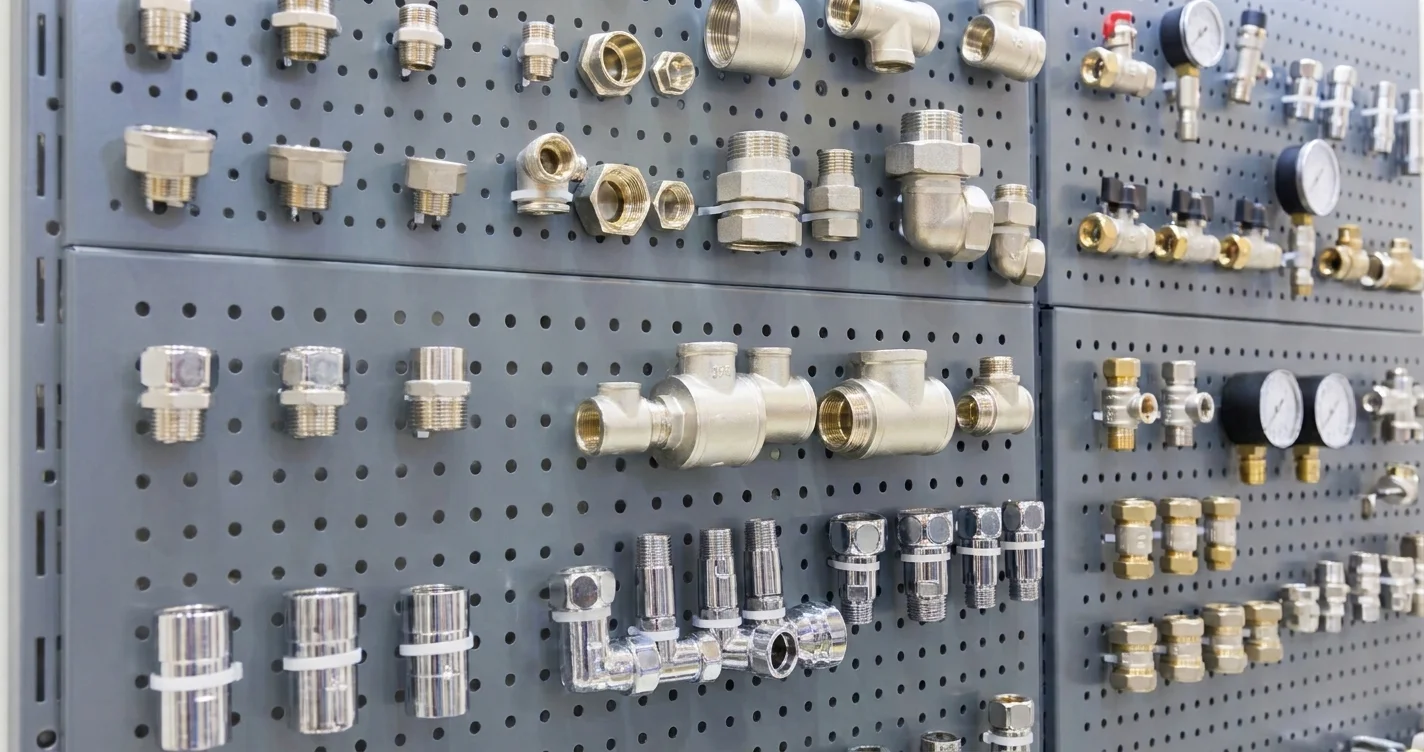
Pipe fittings are used to connect pipes and control the flow of water in a plumbing system. Common types include elbows, tees, reducers, couplings, unions and adapters. Each fitting has a specific function and helps create secure connections for different plumbing requirements. Choosing the right fitting depends on the pipe size, material and operating pressure.
Pipe fittings are essential parts of any plumbing system. They connect pipes, change the direction of water flow, join different pipe sizes and control the movement of fluids. Without the right fittings, a plumbing system can develop leaks, pressure problems and connection failures.
Understanding the types of pipe fittings in a plumbing system helps plumbers, contractors and project managers choose the right components for reliable installation and maintenance.
What Are Pipe Fittings and Why Do They Matter?
Pipe fittings are components that connect, redirect, resize, seal or control flow between lengths of pipe. They matter because a plumbing system is only as reliable as its weakest joint. Most leaks start at a fitting, not along the pipe itself.
Fittings are made from PVC, CPVC, PPR, copper, brass, steel and stainless steel. The material, size and pressure rating of the fitting must suit the pipe it connects to and the fluid it carries.
What Are the Main Types of Pipe Fittings in a Plumbing System?
The main types of pipe fittings in a plumbing system are elbows, tees, crosses, couplings, unions, reducers, adapters, caps, plugs and valves. Each has one core job: change direction, split flow, join pipes, resize a line, close an end or control flow.
Elbows
An elbow changes the direction of a pipe run. The common angles are 90°, 45° and 22.5°. Use a standard elbow when both pipes are the same size. If the sizes differ, a reducing elbow handles the turn and the size change in one piece.
Tees
A tee has three openings and creates a branch off a main line. Equal tees have three ends of the same size. Reducing tees have a smaller branch, which is the usual choice when a small supply line comes off a larger main.
Crosses
A cross has four openings and joins four pipes at one point. Because it sits at the centre of four connections, it takes more stress when temperature changes. Many installers use two tees instead. Crosses do still appear in fire sprinkler layouts.
Couplings
A coupling joins two pipes of the same diameter in a straight line. It is the standard fix for a cracked section or a leak. A slip coupling slides over the pipe ends, which helps when repairing fixed pipework. A compression coupling seals with a gasket or rubber ring, which suits jobs where glue is not an option.
Unions
A union looks like a coupling but can be opened again. It has a nut and two threaded ends, so you can disconnect the line without cutting it. Put unions beside pumps, meters and equipment that needs regular servicing.
Reducers
A reducer connects a larger pipe to a smaller one. It lets you step down the line size without interrupting the flow. Concentric reducers keep the centerline in the middle. Eccentric reducers keep one side flat, which helps in horizontal lines where air or sediment can collect.
Adapters
Adapters join pipes that do not share the same end type or material. A male adapter has external threads and a female adapter has internal threads. The plain end is glued, welded or soldered to the pipe. They are common between PVC and copper.
Caps and Plugs
Both close the end of a pipe. A cap fits over the outside of the pipe and has female threads. A plug goes into a threaded opening and has male threads. They are used during testing, repairs or when a line will be extended later.
Valves
Valves start, stop or control flow. Gate, ball and plug valves isolate a line. Check valves stop reverse flow. Globe, butterfly and diaphragm valves control or throttle the amount passing through. Choose the valve by what the line needs to do, not by price.
Not sure which fitting suits your line? Browse our pipe fittings shop to compare sizes, materials and connection types in one place.
How Do Pipe Fittings Work in Plumbing Systems?
Pipe fittings connect individual pipe sections to create a complete network. Their shape and connection design determine how fluid moves through the system, where branches are formed and how different components are joined.
For example, elbows direct water around obstacles, tees distribute flow to separate lines and reducers connect different pipe diameters. Caps and plugs close unused openings, while unions allow sections to be removed for maintenance.
The connection method also affects system performance. Threaded fittings use compatible male and female threads, socket weld fittings use a welded joint, and buttweld fittings are joined directly to the pipe ends.
What Materials Are Used in Pipe Fittings?
Pipe fitting material affects durability, corrosion resistance, pressure capability and suitability for the transported fluid. The material should match the pipe and operating environment rather than being selected on price alone.
Common materials include:
- Carbon steel: Used in industrial piping, water distribution and applications requiring mechanical strength.
- Stainless steel: Suitable for environments where corrosion resistance is important, including selected marine and chemical applications.
- Galvanized iron: Commonly used for threaded connections in suitable water and utility installations.
- Forged carbon steel: Used for specified high-pressure threaded and socket weld connections.
Material selection should also consider fluid compatibility, operating temperature, external exposure and maintenance requirements.
How to Choose the Right Pipe Fittings?
Choose a pipe fitting by matching its material, size, pressure rating and connection method to your pipe and the fluid inside it. Check all four before you buy. A fitting that suits the pipe but not the pressure will still fail.
Use this checklist when selecting any pipe fitting:
- Material: match the fitting to the pipe, or use an adapter designed for mixed materials.
- Size: check the nominal diameter of every opening, not just the main run.
- Pressure and temperature: confirm the rating covers your working conditions with some margin.
- Connection type: choose threaded, solvent weld, soldered, compression or flanged to suit the job.
- Standards: look for fittings made to recognized standards such as ASME B16.9.
For larger lines, flanges are often the better joint because they can be bolted and opened for maintenance without cutting pipe.
What Are Common Pipe Fitting Selection Mistakes?
Incorrect fitting selection can create problems that may not become visible until the system is operating. Common mistakes include:
- Selecting a fitting based only on nominal size without checking its schedule or wall thickness.
- Mixing incompatible thread standards, such as NPT and BSPT.
- Using a fitting with an insufficient pressure or temperature rating.
- Choosing a material that is unsuitable for the transported fluid or surrounding environment.
- Installing reducers or elbows without considering flow direction and equipment requirements.
- Using an incorrect gasket or sealing method for the connection.
A practical way to prevent these problems is to cross-check the bill of materials against the piping drawings and project specifications before installation. This also helps avoid ordering incorrect components and delays during site work.
Conclusion
Every joint in a plumbing line has a job, and the fitting you choose decides whether it does that job well. Elbows turn the line, tees and crosses split it, couplings and unions join it, reducers and adapters fix size and material mismatches, caps and plugs close it off, and valves control the flow. Once you know the types of pipe fittings in a plumbing system, selection becomes simple: start with what the line needs to do, then match the material, size and pressure rating.
If you are unsure which parts suit your project, Fitting World Trading LLC can help you choose the right fittings for your pipe size, material and working conditions. A few minutes of checking before installation saves hours of repair later.
Get the right fittings for your plumbing system
Tell us your pipe material, size and working pressure, and our team will recommend the fittings that suit your line. You get clear advice and a straightforward quote, with no guesswork about what fits.
Frequently Asked Questions
What are the most common types of pipe fittings?
Common pipe fittings include elbows, tees, reducers, couplings, unions, adapters, crosses, caps, plugs and nipples. Each type performs a different function, such as changing flow direction, connecting pipes, creating branches or closing pipeline openings.
What is the difference between a pipe coupling and a union?
A coupling connects two pipes in a straight line, usually through a threaded, welded or grooved connection. A union also joins two pipe sections but allows them to be disconnected more easily for maintenance or replacement without cutting the pipes.
How do I choose the right pipe fitting for a plumbing system?
Check the pipe size, material, pressure rating, operating temperature and connection type before selecting a fitting. You should also verify the applicable standards and ensure that the fitting is compatible with the transported fluid and the overall piping design.
Expert Guides on Industrial Insights
If you want to go deeper into fittings selection, materials, and piping best practices, these guides from our blog cover related ground.
- 5 Critical Factors to Consider When Choosing Buttweld Fittings: This guide covers key factors such as wall thickness and end preparation.
- Everything You Need To Know About Grooved Pipe Fittings: A complete walkthrough of grooved fitting types, uses, and installation steps.
- Key Factors to Consider When Choosing the Right Flange: A practical guide to picking the correct flange type, material, and pressure rating for your project.
- Grooved Fittings: Advantages, Disadvantages and Applications: Where grooved connections outperform welded or threaded joints, and where they fall short.
- Why Bothwell Fittings Are Ideal for High-Pressure Industrial Applications: How forged fitting construction holds up under extreme pressure and temperature — relevant background when specifying elbows for the same conditions.