Offcanvas top

Rigid vs Flexible Grooved Couplings: When to Use Each

Grooved couplings are the backbone of modern mechanical piping systems. They replace the need for welding or threading by locking onto a pre-cut groove around the pipe end, held together by a housing, gasket, and bolts. The result is a fast, reliable joint that can be assembled in minutes.

But not all grooved couplings work the same way. When it comes to rigid vs flexible grooved couplings, the difference is more than a label. Choosing the wrong type for your application can affect system performance, noise levels, structural integrity, and long-term maintenance costs.

This guide breaks down how each type works, where each one belongs, and what to consider before making a selection.

What Is a Rigid Grooved Coupling

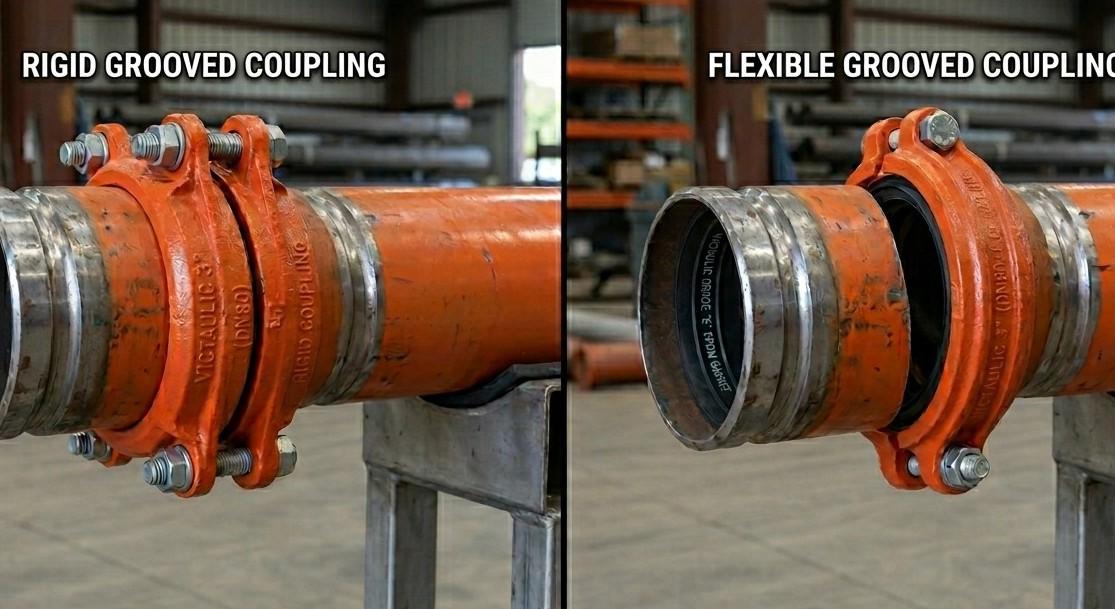
A rigid grooved coupling is designed to hold two pipe segments firmly in place with virtually no movement between them. The housing keys sit deeply into the grooves on both pipe ends, eliminating angular deflection, linear movement, and rotation.

Once tightened, a rigid coupling behaves similarly to a welded or flanged joint in terms of positional stability, but with significantly faster installation.

Key characteristics of rigid grooved couplings include:

  • Zero angular deflection once installed
  • No axial movement along the pipe length
  • High structural rigidity that transfers loads between pipe segments
  • Suitability for straight-run piping where no movement is expected

Rigid couplings are the right choice when your piping system must remain fixed in place, carry structural loads, or comply with strict layout tolerances.

What Is a Flexible Grooved Coupling

A flexible grooved coupling allows a controlled degree of movement between connected pipe ends. The housing keys sit at a shallower engagement angle, permitting slight angular deflection, axial movement, and minor rotation within defined limits.

This built-in flexibility is not a weakness. It is an engineered feature that absorbs vibration, accommodates thermal expansion, and isolates noise from pumps and mechanical equipment.

Key characteristics of flexible grooved couplings include:

  • Angular deflection of up to 3 to 4 degrees depending on pipe size
  • Axial movement to absorb pipe expansion and contraction
  • Vibration dampening through the elastomeric gasket
  • Noise isolation between mechanical equipment and the piping system

Flexible couplings are the right choice when your piping must handle movement, vibration, thermal cycling, or seismic activity.

Rigid vs Flexible Grooved Couplings at a Glance

Feature Rigid Grooved Coupling Flexible Grooved Coupling
Angular Deflection None Up to 3 to 4 degrees
Axial Movement None Permitted within limits
Vibration Isolation No Yes
Noise Reduction No Yes
Structural Load Transfer Yes Limited
Best Use Case Straight runs, risers Near pumps, seismic zones, HVAC
Thermal Expansion Handling No Yes

Where Rigid Grooved Couplings Are Used

Rigid grooved couplings are preferred in piping systems where strength, stability, and alignment are the main requirements.

  • Fire Protection Systems: Commonly used in branch lines, cross mains, and feed mains where rigid pipe connections are required.
  • Vertical Risers: Help maintain pipe alignment and structural stability between floors.
  • Long Horizontal Runs: Keep piping properly aligned over extended distances.
  • High-Pressure Industrial Lines: Reduce pipe movement that could place stress on fittings and equipment connections.

If you are designing or installing fire protection systems, learn more about grooved pipe fittings in UAE fire protection systems to better understand where rigid and flexible couplings fit within the overall piping network.

Where Flexible Grooved Couplings Are Used

Flexible grooved couplings are used in piping systems that experience movement, vibration, or temperature changes.

  • Pump Connections: Prevent vibration from pumps and rotating equipment from traveling through the piping system.
  • HVAC Systems: Common in chilled water and hot water networks where pipes expand and contract due to temperature changes.
  • Seismic Applications: Allow controlled movement in piping systems located in seismic zones.
  • Mechanical Equipment Rooms: Help reduce vibration, noise, and thermal stress around equipment.
  • Underground Piping: Accommodate minor pipe movement caused by ground settlement.

When selecting components for your project, working with a grooved pipe fittings supplier provides access to flexible and rigid couplings, along with elbows, tees, reducers, and end caps required for a complete piping system.

How to Decide Which Type You Need

Choosing between rigid and flexible grooved couplings depends on the location and function of the piping section.

Use rigid couplings for:

  • Straight horizontal and vertical pipe runs
  • Seismic brace locations requiring fixed support
  • Areas where pipe deflection must be minimized

Use flexible couplings for:

  • Connections near pumps and compressors
  • Piping systems requiring thermal expansion movement
  • Pipe sections crossing building expansion joints
  • Seismic applications specified by the project engineer

Most piping systems use a combination of both coupling types. For example, an HVAC chilled water system may use flexible couplings near pumps to absorb vibration and rigid couplings throughout the main distribution network.

For a broader understanding of mechanical pipe jointing solutions, read our Viking Johnson VJ Couplings guide, which explains how coupling designs accommodate pressure, movement, and pipe alignment in industrial piping systems

Material and Pressure Considerations

Rigid and flexible grooved couplings are commonly manufactured from ductile iron, with stainless steel and carbon steel options available for corrosive or demanding environments. The material does not determine whether a coupling is rigid or flexible; that depends on its design.

Pressure ratings vary according to pipe size, wall thickness, and coupling grade. Standard ductile iron couplings are suitable for most fire protection, HVAC, and industrial water systems. Always verify the coupling’s pressure rating against system requirements.

Gasket selection is equally important. EPDM is widely used for water and HVAC applications, nitrile is suitable for oil and fuel systems, and silicone is preferred for high-temperature services.

Common Mistakes to Avoid

A common mistake is using rigid couplings throughout an entire system, including near pumps and mechanical equipment. This can increase vibration, noise, and equipment wear.

On the other hand, installing flexible couplings at seismic brace locations can reduce the effectiveness of the bracing system.

Always follow the manufacturer’s installation guidelines and project specifications. If there is uncertainty, consult the system engineer before selecting or replacing coupling types.

Conclusion

Grooved couplings offer a fast, reliable, and flexible alternative to traditional welding or threading. Rigid types hold the line firm and carry structure. Flexible types absorb what rigid types cannot, movement, vibration, and thermal change. Used together in the right locations, they make a piping system both stable and resilient.

For certified, high-quality components across the UAE and GCC, FW Trading LLC supplies a comprehensive inventory tailored to your project’s pressure and material needs. Ready to get started? Contact us today for technical guidance or a quick quote.

Expert Guides on Industrial Insights

If you want to deepen your understanding of industrial fittings, piping systems, and engineering best practices, explore these related articles:

Grooved Fittings Advantages, Disadvantages and Applications

Modern piping systems require connections that are reliable, durable, and easy to maintain. Grooved fittings have become one of the most widely adopted pipe joining solutions because they offer a practical alternative to traditional welding and threading methods.

These fittings are extensively used in fire protection systems, HVAC networks, water distribution pipelines, and industrial facilities. Their ability to simplify installation while maintaining strong sealing performance makes them a preferred choice for engineers, contractors, and facility managers working on large-scale infrastructure projects.

What Are Grooved Fittings?

Grooved fittings are mechanical pipe joining components designed to connect pipes through pre-formed grooves near their ends. A coupling housing is placed around the grooved sections and tightened, compressing a rubber gasket to create a secure and leak-resistant seal.

Unlike welded systems, grooved fittings do not require heat during installation. This eliminates the need for hot work permits in many cases and reduces safety risks associated with welding operations.

Grooved piping systems include various components such as couplings, elbows, tees, reducers, and end caps. This modular design makes them suitable for both simple and highly complex piping networks used in commercial and industrial environments.

Advantages of Grooved Fittings

Grooved fittings offer several important benefits that make them a preferred choice in modern piping systems.

Easy Installation

One of the biggest advantages is their simple and fast installation process. Unlike welding or threading, grooved fittings can be installed using basic mechanical tools. This reduces dependency on highly skilled labor and speeds up project completion.

Strong and Reliable Connection

Grooved systems provide a tight and secure seal when properly installed. The combination of coupling housing and gasket ensures leak resistance even under varying pressure conditions. This makes them suitable for critical systems like fire protection and HVAC.

Flexibility and Vibration Absorption

Piping systems often experience vibration, thermal expansion, and contraction. Grooved fittings allow slight movement within the system, reducing stress on pipes and connected equipment. This improves durability and prevents premature failures.

Lower Maintenance Requirements

Maintenance becomes significantly easier with grooved piping systems. Instead of cutting or rewelding pipes, individual sections can be removed and replaced quickly. This reduces downtime and overall maintenance costs.

Safer Working Conditions

Since grooved fittings eliminate welding, there is no exposure to open flames, sparks, or high heat. This improves safety on construction sites and is especially beneficial in occupied buildings or sensitive industrial environments.

Disadvantages of Grooved Fittings

Despite their advantages, grooved fittings also have certain limitations that should be considered.

Higher Initial Cost

The upfront cost of grooved fittings is often higher compared to traditional joining methods. Couplings, gaskets, and specialized groove preparation can increase initial project expenses. However, long-term savings often offset this cost.

Limited Pipe Material Compatibility

Grooved fittings are mainly suitable for steel, stainless steel, and ductile iron pipes. They are not universally compatible with all pipe materials, which limits their use in some applications.

Installation Sensitivity

Proper installation is critical for performance. Incorrect groove dimensions, poor gasket alignment, or improper tightening can lead to leaks. This makes skilled installation and quality control essential.

Size and Application Limitations

Although grooved systems are available in many sizes, extremely specialized piping systems may require alternative joining methods. High-pressure or custom-engineered systems may not always be suitable for grooved solutions.

Materials Used in Grooved Fittings

Material selection plays a major role in system performance.

Ductile iron is the most commonly used material due to its high strength, durability, and impact resistance. It is widely used in fire protection and water distribution systems.

Stainless steel fittings are preferred in corrosive or hygienic environments such as marine facilities, chemical plants, and food processing industries.

Carbon steel is another widely used option that provides a balance between cost and strength for general industrial applications.

Gaskets are equally important as they form the sealing element. They are available in different compounds designed for water, oil, chemicals, and high-temperature environments.

Working with a reliable supplier such as FW Trading LLC ensures proper selection of fittings and gasket materials based on project requirements.

Applications of Grooved Fittings

Grooved fittings are widely used across a variety of industries due to their ease of installation, secure connections, and reliable performance. Below are some of the most common applications of grooved fittings.

Fire Protection Systems

Grooved fittings are extensively used in fire protection systems, including sprinkler networks, standpipe systems, and hydrant lines. Their quick installation and dependable sealing capabilities help reduce project time while ensuring system reliability.

HVAC Systems

Heating, ventilation, and air conditioning (HVAC) systems commonly utilize grooved fittings for chilled water, condenser water, and heating pipelines. Their flexibility simplifies installation, maintenance, and future system modifications.

Plumbing and Water Supply Systems

Commercial and residential water distribution networks often rely on grooved fittings for fast assembly and leak-resistant performance. These fittings provide durable connections capable of handling varying water pressures.

Oil, Gas, and Petrochemical Systems

Grooved fittings are used in industrial process piping where maintenance accessibility and operational efficiency are important. Properly rated fittings allow easier system expansion, repair, and replacement compared to traditional welded connections.

Mining and Water Treatment Facilities

In mining operations and water treatment plants, grooved piping systems are used to transport treated water, wastewater, and abrasive slurries. Their corrosion-resistant properties and robust construction make them suitable for demanding environments.

Top Grooved Products

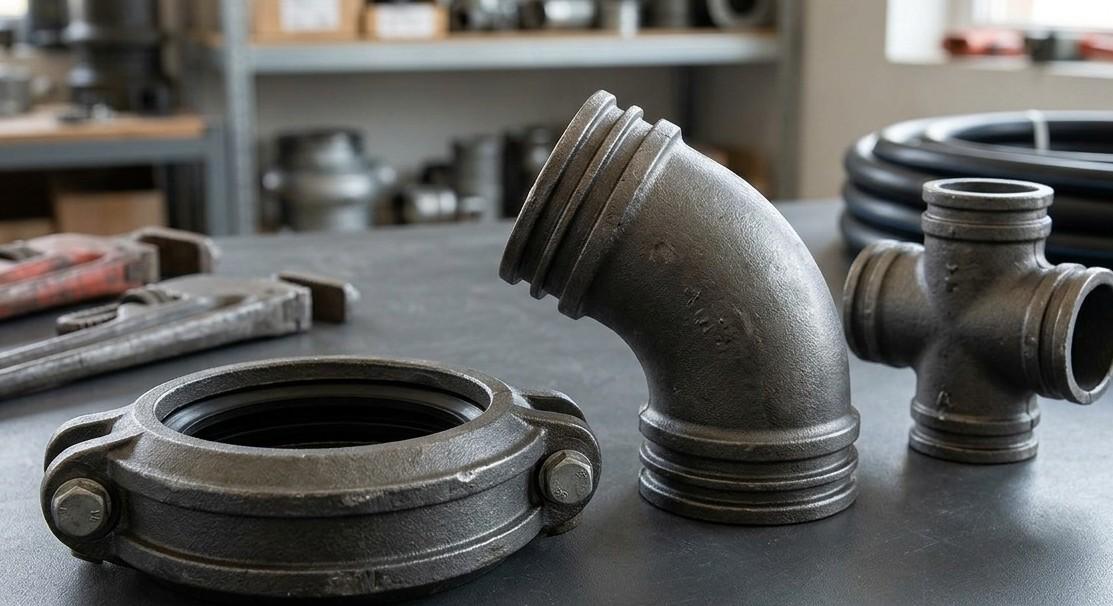
A complete grooved piping system includes grooved couplings, grooved elbows, grooved tees, grooved reducers, and grooved caps. These components are designed to work together to create a flexible, durable, and reliable piping network for various industrial applications.

Explore our complete range of Grooved Fittings to find high-quality products that ensure leak-free performance, extended service life, and reduced maintenance requirements. High-quality grooved products are ideal for fire protection, HVAC, plumbing, and other demanding piping systems.

How to Choose the Right Grooved Fittings

Selecting the correct grooved fitting requires careful analysis of system conditions.

Key factors include pipe size, pressure rating, temperature conditions, and fluid type. Compatibility between pipe material and fitting type is essential for long-term performance.

It is also important to ensure that groove dimensions meet manufacturer specifications. Even small deviations can affect sealing performance.

Consulting experienced suppliers or engineers helps reduce installation errors and ensures system efficiency throughout its lifecycle.

Conclusion

Grooved fittings offer a fast, reliable, and flexible alternative to traditional welding or threading. While they require a higher upfront material cost and precise cutting, the immense savings in installation time and long-term maintenance make them an ideal choice for fire protection, HVAC, and industrial piping.

For certified, high-quality components across the UAE and GCC, FW Trading LLC supplies a comprehensive inventory tailored to your project’s pressure and material needs. Ready to get started? Contact us today for technical guidance or a quick quote.

Expert Guides on Industrial Insights

If you want to deepen your understanding of industrial fittings, piping systems, and engineering best practices, explore these related articles:

Why Both-Well Fittings Are Ideal for High-Pressure Industrial Applications

In modern industrial systems, especially those operating under extreme pressure, the reliability of every component matters. From oil and gas pipelines to petrochemical plants and power generation units, even the smallest fitting plays a critical role in ensuring safety, efficiency, and system integrity. Among the many global manufacturers of forged fittings, Both-Well Fittings has earned a strong reputation for delivering durable, high-performance solutions specifically engineered for high-pressure environments.

This article explores why Both-Well fittings are widely trusted in demanding industries and what makes them a preferred choice for engineers, procurement specialists, and project managers worldwide.

Understanding High-Pressure Forged Fittings

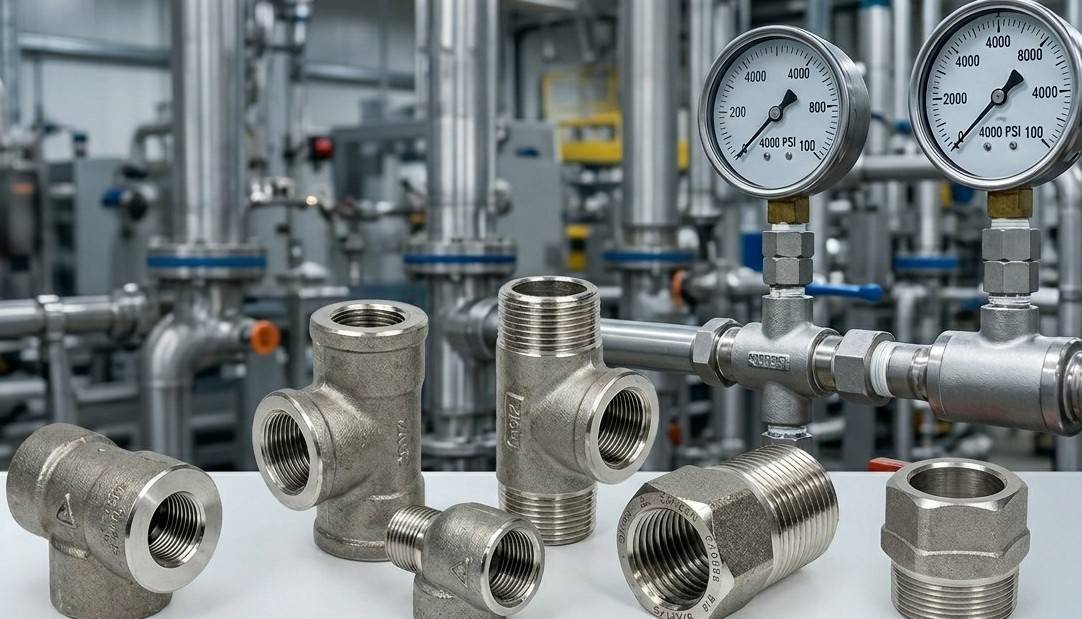
High-pressure applications require components that can withstand intense mechanical stress, vibration, temperature fluctuations, and corrosive environments. This is where forged fittings stand out. For industries seeking proven durability and compliance, products like Bothwell forged high-pressure pipe fittings (3000# / 6000 PSI — ASTM A105, ANSI B16.11) are widely trusted for maintaining safe and stable operations under extreme conditions.

Forged fittings are manufactured by applying extreme compressive force to solid metal billets, resulting in a refined grain structure that significantly enhances strength and durability. Unlike cast fittings, forging eliminates internal voids and weak points, making the final product far more resistant to failure under pressure.

According to industrial engineering sources, forged fittings are widely used in pipelines handling pressures ranging from 3000 PSI to 9000 PSI, particularly in critical sectors like oil & gas, petrochemicals, and offshore engineering.

Who is Both-Well?

Both-Well Steel Fittings Co., Ltd. is a Taiwan-based manufacturer established in 1985, known globally for producing high-pressure forged pipe fittings. The company specializes in socket-weld and threaded fittings designed according to international standards such as ASME B16.11 and BS 3799.

Both-Well fittings are widely used in industries where safety and reliability are non-negotiable, including:

  • Oil & gas pipelines
  • Petrochemical refineries
  • Power plants
  • Marine and offshore systems
  • Industrial hydraulic systems

The company is also certified under ISO 9001 and PED standards, reflecting its commitment to quality management and international compliance.

Key Reasons to Choose Both-Well Fittings for High-Pressure Applications

1. Exceptional Strength Through Forging Technology

The biggest advantage of Both-Well fittings lies in their forged construction process. The forging method compresses and aligns the metal’s grain structure, resulting in superior mechanical strength compared to casting or fabrication.

This makes Both-Well fittings highly resistant to:

  • High internal pressure
  • Mechanical fatigue
  • Thermal stress
  • Vibration in dynamic systems

In high-pressure pipelines, this strength directly translates into fewer failures and higher operational safety.

2. Designed for Extreme Pressure Ratings

Both-Well fittings are engineered for demanding pressure classes, typically:

  • 2000 PSI
  • 3000 PSI
  • 6000 PSI
  • Up to 9000 PSI (on request)

These ratings make them suitable for heavy-duty applications where fluid or gas is transported under extreme force. Such performance capability is essential in refineries, offshore rigs, and chemical processing plants where system failure is not an option.

3. Compliance with International Standards

One of the strongest reasons engineers trust Both-Well is its strict adherence to global manufacturing standards, including:

  • ASME B16.11 (Socket-weld and threaded fittings)
  • BS 3799 standards
  • Industry-specific approvals from global oil & gas operators

This ensures that every fitting is dimensionally accurate, compatible with global piping systems, and safe for high-risk environments.

4. High-Quality Materials for Corrosive Environments

Both-Well fittings are typically manufactured using:

  • Carbon steel (A105)
  • Stainless steel (SS316L and SS304)
  • Alloy steel variants

These materials are selected for their:

  • High corrosion resistance
  • Excellent tensile strength
  • Long service life in harsh environments

This is especially important in offshore and chemical industries, where exposure to seawater, acids, and chemicals can quickly degrade inferior materials.

5. Precision Engineering for Leak-Free Performance

In high-pressure systems, even a microscopic leak can lead to catastrophic failure. Both-Well fittings are designed with precision machining techniques to ensure:

  • Tight dimensional tolerances
  • Smooth sealing surfaces
  • Accurate threading and socket alignment

This precision results in leak-proof connections, reducing maintenance costs and improving system reliability over time.

6. Versatile Product Range

Both-Well offers a wide range of forged fittings, including:

  • Elbows (45° & 90°)
  • Tees and crosses
  • Couplings and half couplings
  • Unions
  • Caps and plugs

These are available in both socket-weld and threaded configurations, making them suitable for different installation requirements.

This versatility allows engineers to design complex piping systems without compromising compatibility or performance.

7. Trusted Global Industry Reputation

Both-Well has built long-term relationships with major industrial clients and has been approved by several global organizations and end-users, including major oil and petrochemical companies.

Its reputation is built on:

  • Consistent product quality
  • Reliable delivery schedules
  • Strong after-sales support
  • Continuous technological improvement

Such trust is critical in industries where downtime can cost millions.

Applications of Both-Well High-Pressure Fittings

Both-Well fittings are widely used across industries where high-pressure flow control is essential:

  • Oil & Gas: drilling rigs, pipelines, refineries
  • Petrochemical Plants: chemical transport systems
  • Power Generation: steam and hydraulic systems
  • Shipbuilding: fuel and fluid transfer systems
  • Industrial Manufacturing: high-pressure machinery systems

Their ability to withstand extreme conditions makes them indispensable in mission-critical operations.

Advantages Over Conventional Fittings

Compared to standard or cast fittings, Both-Well forged fittings offer:

  • Higher pressure resistance
  • Better fatigue performance
  • Longer operational lifespan
  • Reduced risk of leakage
  • Greater dimensional accuracy

These advantages significantly reduce lifecycle costs, even if the initial investment is higher.

Conclusion

In high-pressure industrial systems, safety, durability, and performance are critical, and every component must reliably withstand extreme operating conditions over long service life. Both-Well fittings meet these demands through forged construction, strict international standards, premium materials, and precision engineering.

Their leak-free performance under high pressure makes them ideal for oil & gas, petrochemical, marine, and power generation industries, while also reducing failure risks, maintenance needs, and overall operational costs.

Choosing high-quality forged fittings is a strategic investment for long-term system integrity and efficiency. For reliable industrial piping solutions and expert support, FW Trading LLC is a trusted pipe fittings supplier offering premium sourcing, competitive pricing, and expert industrial assistance.

For inquiries, technical assistance, or product sourcing, please reach out through the contact us page.

Expert Guides on Industrial Insights

If you want to deepen your understanding of industrial fittings, piping systems, and engineering best practices, explore these related articles:

Bothwell Forged Fittings Supplier in UAE, Dubai

Industrial piping systems demand components that can withstand extreme pressure, elevated temperatures, and harsh operating conditions. Bothwell forged fittings have established themselves as a reliable choice for engineers and procurement teams across the UAE and the wider GCC region. Their consistent quality, compliance with international standards, and availability across a wide range of configurations make them a go-to solution for critical applications.

Whether you are sourcing for an oil and gas project, a marine vessel, or a large-scale industrial facility, understanding what Bothwell forged fittings are, how they are classified, and where to source them in the UAE will help you make smarter procurement decisions.

What Are Bothwell Forged Fittings

Bothwell is a well-recognized brand in the industrial piping sector, known for manufacturing high-pressure forged steel fittings. These are components used to connect, redirect, or terminate piping runs in systems that handle liquids and gases under pressure.

The forging process itself is what sets these fittings apart from cast or fabricated alternatives. Forged fittings are shaped under intense mechanical force, which aligns the grain structure of the metal. This results in superior strength, improved resistance to stress and fatigue, and a longer service life compared to components manufactured through other methods.

Why the Forging Process Matters

  • Produces a denser, stronger grain structure compared to casting
  • Delivers better resistance to impact, fatigue, and stress cracking
  • Reduces the risk of internal voids or porosity found in cast components
  • Results in a longer service life with lower maintenance requirements

Bothwell forged fittings are produced in accordance with internationally accepted standards including ASME B16.11, ASTM A105 for carbon steel, and ASTM A182 for stainless steel grades. These certifications ensure dimensional accuracy, pressure integrity, and material traceability, all of which are critical in regulated industries.

Types of Bothwell Forged Fittings Available in UAE

The Bothwell range covers a broad selection of fitting types, giving procurement teams the flexibility to source multiple components from a single trusted brand.

Elbows

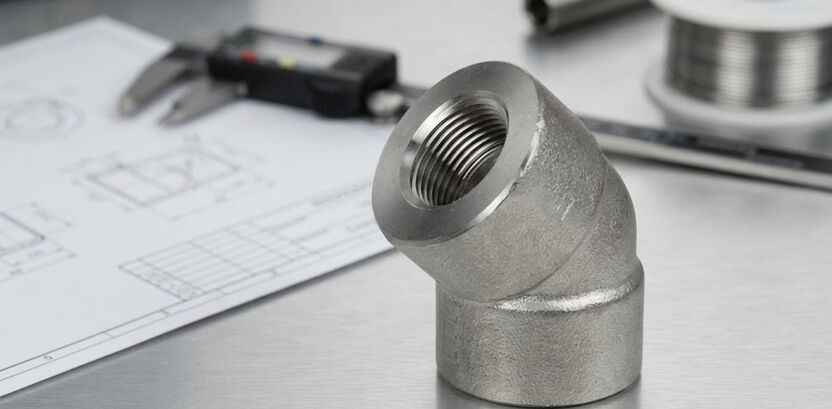
Available in 45-degree and 90-degree configurations, elbows allow directional changes in pipeline routes without compromising flow efficiency. Bothwell elbows are available in both socket weld and threaded end connections. You can explore the available range of threaded fittings suitable for these applications.

Tees

Used where a branch connection is needed from the main pipeline run. Equal tees allow flow splitting between two identical pipe sizes, while reducing tees accommodate different pipe diameters on the branch outlet. These are widely used in distribution systems and process plants.

Couplings and Half Couplings

These serve as connection points between two pipe sections or as branch outlets on larger pipelines. Their compact design and reliable sealing performance make them a common choice in tight-space installations.

Unions

Unions allow for easy disconnection and reassembly of pipe sections during maintenance. The three-piece design means the line can be broken at any point without disturbing the rest of the system.

Caps and Plugs

Used to seal the ends of pipes or outlets when a connection point is not in use. These are essential in systems that are incrementally expanded over time.

Pressure Classes and Material Grades

Bothwell forged fittings are available in pressure classes of 2000 lb, 3000 lb, and 6000 lb. The choice of pressure class depends on the operating pressure of the system and the safety factors required by the applicable design code. For systems requiring extreme pressure handling, browsing the full range of high pressure fittings can help identify the right specification.

Commonly Stocked Material Grades in the UAE

  • Carbon Steel A105 — the most widely used grade for general industrial and oil and gas applications
  • Stainless Steel 304 and 316 — preferred where corrosion resistance is a priority
  • Alloy Steel F11 and F22 — suited for elevated temperature service in power and petrochemical plants
  • Duplex and Super Duplex Stainless Steel — specified for aggressive corrosive media in offshore and chemical environments

The end connection type is another variable to consider. Socket weld fittings are welded directly onto the pipe and are preferred for smaller bore, high-pressure applications. Threaded fittings use NPT or BSPT thread forms and offer the advantage of tool-free installation, which is useful in systems where periodic disassembly is required.

Applications of Bothwell Forged Fittings in the UAE

The industrial landscape of the UAE makes it one of the highest-demand markets for forged steel fittings in the region. Several key sectors drive consistent procurement volumes.

Oil and Gas — Both onshore and offshore operations require fittings that handle high-pressure hydrocarbon service with zero tolerance for failure. Suppliers who also carry a broad range of valves alongside forged fittings can simplify procurement for these projects considerably.

Petrochemical and Chemical Processing — Plants operating with aggressive fluids require fittings manufactured from corrosion-resistant materials. Stainless steel and alloy grade Bothwell fittings are regularly specified in these environments, often used together with quality gaskets to ensure leak-free flange connections.

Marine and Shipbuilding — The UAE’s active shipbuilding and ship repair sector creates strong ongoing demand for marine-grade piping components, including marine valves used alongside forged fittings in vessel piping systems.

Power Generation — These installations commonly incorporate flanges where pressure-rated bolted connections are required between equipment and pipework, working in conjunction with forged fittings throughout the system.

Construction and Infrastructure — Fire suppression systems and utility piping rely on standards-compliant forged fittings to meet project specifications and safety requirements.

How to Choose the Right Bothwell Fittings Supplier in UAE

Not every supplier operating in the UAE market stocks genuine Bothwell products across the full range of sizes, pressure classes, and material grades. Choosing the right supplier involves evaluating several factors beyond price alone.

Key Factors to Evaluate

  • Product Authenticity and Traceability — Genuine Bothwell fittings come with material test reports and certification documentation. Any reputable supplier should be able to provide these upon request, especially for oil and gas and safety-critical applications.
  • Stock Availability — A supplier with a comprehensive inventory will fulfill orders across multiple specifications without causing delays. Suppliers who also stock complementary products such as buttweld fittings can serve as a single source for complete piping systems.
  • Industry Experience — Suppliers with years in the UAE industrial market have a deeper understanding of project requirements, local regulations, and sector-specific demands.
  • Technical Support — Suppliers who assist your team in selecting the correct fitting type, pressure class, and material grade add genuine value beyond the transaction itself.
  • Logistics Capability — Suppliers with established delivery networks across the UAE and GCC region provide faster turnaround and more reliable service for urgent project needs.

Why Sourcing Locally in Dubai Makes Sense

Dubai has established itself as one of the most important industrial supply hubs in the Middle East. Proximity to major infrastructure projects, offshore operations in Abu Dhabi and beyond, and well-developed logistics networks make Dubai-based suppliers a practical choice for buyers across the UAE and the broader GCC.

Advantages of Working with a Dubai-Based Supplier

  • Shorter lead times compared to international sourcing
  • Lower freight and logistics costs
  • Ability to inspect materials before delivery
  • Familiarity with UAE project documentation and compliance requirements
  • Faster response for urgent or last-minute procurement needs

Additionally, local suppliers can provide the necessary certification and traceability documents in formats that meet project specifications, reducing back-and-forth with international vendors.

Conclusion

Sourcing the right Bothwell forged fittings in the UAE requires a clear understanding of product specifications, pressure ratings, material grades, and supplier reliability. Working with an experienced Dubai-based supplier ensures access to genuine, certified products with the documentation and logistical support that industrial projects demand.

For premium forged fittings and expert sourcing support, visit Fitting World Trading LLC. For inquiries, technical assistance, or product sourcing, please reach out through the contact us page.

Expert Guides on Industrial Insights

If you want to deepen your understanding of industrial fittings, piping systems, and engineering best practices, explore these related articles:


Sign Up to Receive Great Offers!